As an Amazon Associate I earn from qualifying purchases.
Trekking down a paved path: Education for Women
Do you have women in your family who have gone to college? What about any doctors, lawyers or other ceiling busting women? If so, you have Representative Patsy Takemoto Mink to thank.
Fifty-one years ago, Rep. Mink authored a bill and got Congress to pass this landmark piece of legislation. The Title IX of Education Amendments of 1972 prohibits discrimination on the basis of gender in educational institutions and programs that receive federal funding.
This legislation was groundbreaking for a number of reasons. For the first time women were entitled to an equal education on every level. No more could colleges turn away women from entering particular programs of study!
It also paved the way for sex equity in school sports and other school sponsored extracurricular activities.
Ultimately, The bill was renamed the Patsy Takemoto Mink Equal Opportunity in Education Act in 2002 to honor her contributions to civil rights, and economic and social justice.
An interview with Rep. Mink in 2002 shared her personal motivations for authoring the bill.
“I have a very personal connection with Title IX because while I was wanting to go to medical school and I had written to a dozen or more medical schools to seek entry, each one of them turned me down by saying that they did not admit women to their schools. It came to me as quite a shock that in America it was not a person’s grade, aptitude, tests, recommendations that got the person into the careers of their choice, but that it had to do with one’s gender.”
Luckily, we have come far from those ceiling-inhibiting days. What is something you’re grateful you were able to accomplish as a woman in your lifetime that your mother could not?
Can’t get enough of Joyana Peters? Here are more posts you may enjoy.
Find more ways to spoil your inner bookworm!
Check out the Amaryllis Co. Shop, fully stocked with custom designs perfect for every book loving Amaryllis Girl! From shirts, mugs, wine glasses, and more, I have curated a shop with all of my favorites! SHOP HERE! You can also find my collection of bookish merchandise on Etsy.
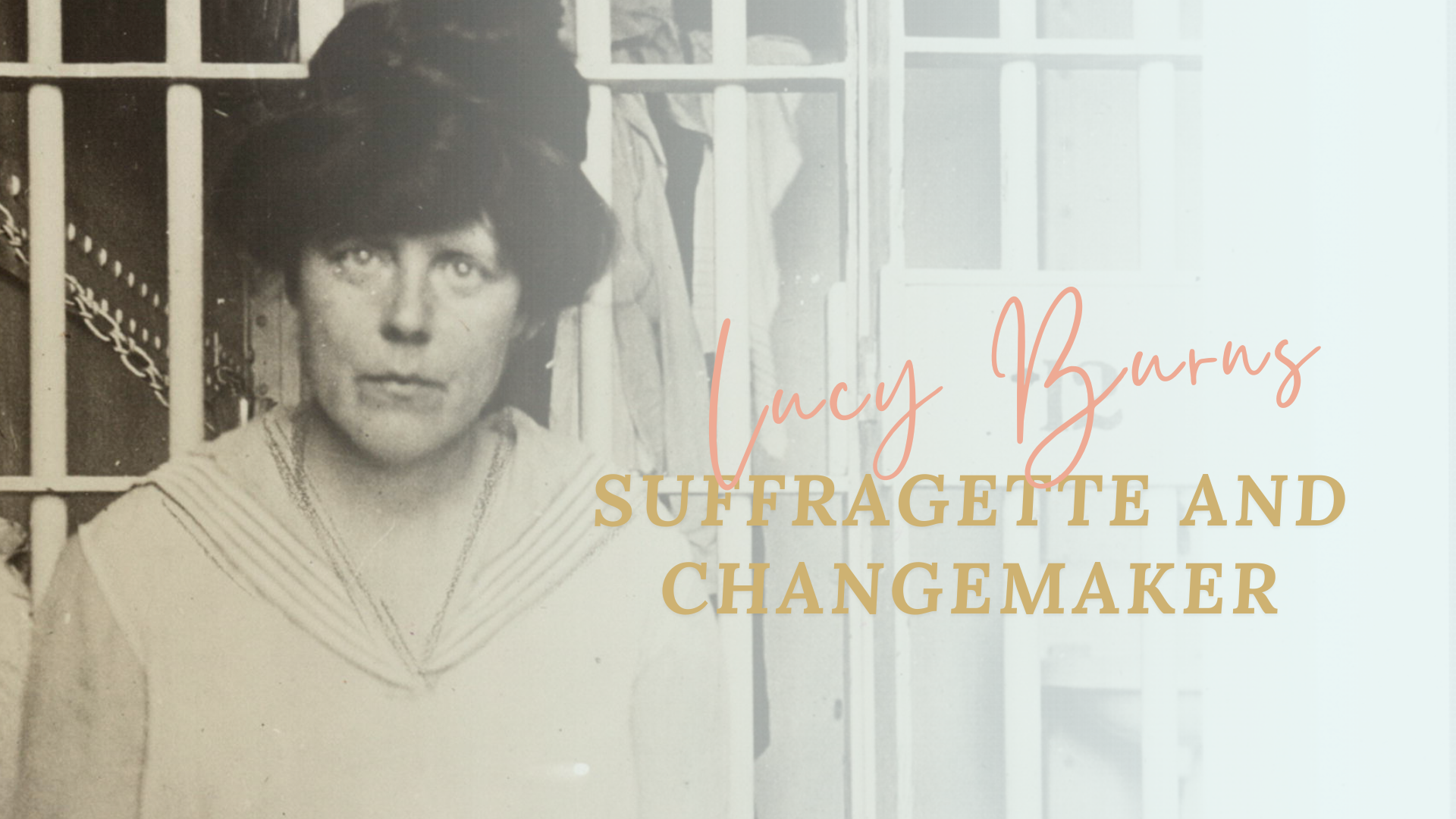
Lucy Burns- American suffragette and woman’s rights activist.
Inspiration and Friendships
Lucy Burns advocacy efforts began when she spent time in the UK working with Emmeline Pankhurst and the Women’s Social and Political Union.She joined their protests and was arrested for the first time. While there, she also met activist Alice Paul. The two bonded over the inactivity of American suffragettes and their respect for the more militant strategies of the UK suffragette movement.
The Congressional Committee
Upon their return to the U.S, Burns and Paul became the heads of the Congressional Committee of the National American Women Suffrage Association. Both women felt strongly that the best way to ensure woman’s suffrage was to advocate on the federal level for a suffrage amendment.This was a controversial issue in the NAWSA with many willing to settle for guaranteed victories on the state level, while others wanted to “go big or go home” refusing to settle until there was a federal level victory of woman’s suffrage for all.
NAWSA leaders were nervous about approving the Committee or many of its proposed advocacy ideas. They did, at least, approve a suffrage parade which Burns and Paul organized for the day before newly elected Woodrow Wilson’s Inauguration Day. See my other blog post on the March on Washington for further details about this event. NAWSA’s one stipulation was that the Congressional Committee would receive no further funding from NAWSA. This was the beginning of Burns and Paul’s split from NAWSA.
Lucy Burns and The National Woman’s Party
Burns and Paul split from NAWSA and formed their own suffrage group called the Congressional Union. This caused further controversy and divisiveness within the suffrage movement. Many felt threatened by Burns and Paul’s more militant tactics and that they’d alienated political supporters. Eventually Burns and Paul created their own political party called the National Woman’s Party.They felt this was the best way to guarantee direct action in fighting for women’s rights. Their sole goal was the federal right to vote.
In 1917 the NWP led a protest in front of the White House. The women were called the Silent Sentinels and were arrested and sent to the Occoquan Workhouse.
Life in Prison
Burns and Paul led the arrested women in hunger strikes to continue protesting their cause from prison. She led a number of continued protests from prison including circulating a document that defined the status of a political prisoner and alerting the women to their rights. She was eventually put in solitary confinement.
Conditions worsened but the women refused to give up their cause. Eventually, Burns and the women were forced to face what became known as the “Night of Terror”.
The women were beaten and refused medical treatment. Burns continued to call out and reassure the other women despite numerous threats. Eventually guards handcuffed her hands over her head to her cell door and left her that way for the rest of the night. In solidarity, the rest of the suffragette prisoners all held their hands in the same position and stood there with her.
The Aftermath of the “Night of Terror”
After enduring the “Night of Terror” the women conducted another hunger strike for the following three days. The warden eventually moved Burns to another block and ordered her to be force fed. They required five people to hold her down and when she refused to open her mouth, they eventually forced a tube up her nostril.
The Final Push for Suffrage
Burns, Paul and other advocates continued to lobby for votes to pass the federal amendment for woman suffrage. They were once again jailed after another protest at the White House in 1918. After being treated horribly in prison again they were finally released shortly before the next election. They decided their sole focus needed to be on getting anyone in Congress who supported suffrage. This was the first time they focused on candidates outside the Democratic Party. It worked and they cost Democrats their majority in Congress.
By this point tensions between the suffragettes and Wilson were at an all-time high. He realized something needed to be done, especially after all the negative publicity from the protests, arrests and recent election. He requested a special assembly of Congress in May of 1919.
On May 21st the House passed the Susan B. Anthony amendment. The Senate passed it on June 4th. Although the amendment was passed, the suffragettes still had to make sure 3/4 of the states agreed to ratify it. Finally on August 18, 1920, Tennessee became the thirty-sixth state to ratify the Anthony Amendment. The quest for federal suffrage was finally over.
Lucy Burns’ Legacy
Of all the suffragettes from this era, Lucy Burns spent the most time in prison. Once Tennessee ratified the Amendment, Burns was quoted as saying “I don’t want to do anything more. I think we have done all this for women, and we have sacrificed everything we possessed for them, and now let them fight for it now. I am not going to fight anymore.” She retired from political life and spent the rest of her time with her orphaned niece until her death in 1966.
Lucy Burns was named an honoree by the National Women’s History Alliance in 2020. The Lucy Burn Museum also opened to the public in January 2020 at the former site of the Occoquan Workhouse where the “Night of Terror” took place. The museum commemorates Burns and the other suffragettes and their sacrifices in the fight for suffrage.
I am so honored to speak at the Lucy Burns Museum this weekend and honor these women for Women’s History Month. I hope you can join me or stay tuned for the replay of the event soon in my VIP Member section.
Check out more of my Changemaker articles below!
Find more ways to spoil your inner bookworm!
Check out the Amaryllis Co. Shop, fully stocked with custom designs perfect for every book loving Amaryllis Girl! From shirts, mugs, wine glasses, and more, I have curated a shop with all of my favorites! SHOP HERE! You can also find my collection of bookish merchandise on Etsy.
As an Amazon Associate I earn from qualifying purchases.
What better history to research during December than the frankincense and myrrh meaning and guests of the Nativity?
We Three Kings- we all know the song and to some extent we all think we know the story- Jesus is asleep in the manger and the three kings follow the star of Bethlehem to visit and bring gifts to the newborn king. But from there the story gets fuzzy. Who were these three kings and why did they bring these particular gifts? What even is Myrrh, let alone what was the myrrh meaning?
My son is a huge questioner and asked me this Christmas season. Going online I found the answers hard to find. But my sister, an acupuncturist in California, surprisingly had an interesting explanation. Here’s herproposal in explaining the origins of the Three Kings Names and Gifts.
Meet the Men: 3 Kings Names and Gifts
For starters, the names of the three Kings are believed to be Melchior, Caspar, and Balthasar. But, this is a guess because there is very little known about the actual kings. They are only mentioned in the Bible as wise men who traveled from the East. However, we’re not even completely sure how many kings there were. Theological scholars have determined over the years that there were three. Some believe this was because of a symbolic significance- (to demonstrate the three ages of men) others came to this determination because of the fact there were only three gifts mentioned.
The gifts mentioned were gold, frankincense and myrrh. The gold feels pretty self-explanatory- since Joseph and Mary were literally holed up in a barn, gold would probably come in handy. But what were these other gifts?
The general explanation offered is they were very expensive, fragrant smelling oils and the gifts were meant to bestow a great honor. This was the explanation I remember being offered in my own Catholic school days. This was also the explanation my son received which left him asking these questions. His exact words, I believe, were, “Why would these “wise” men bring gifts that had no purpose except to smell good? Why would Jesus have needed that?” Touche.
The other explanation I’ve found feels almost “woo-woo” to me. Myrrh was an oil used for burying the dead and the wise men were so “wise” that they were foretelling the future and Jesus’s future crucifixion. Hm, not sure how I feel about “fortune-telling” in the Nativity story.
Tidings of Comfort and Joy
Here’s where my sister enters with what honestly feels like such a common-sense explanation. According to Chinese medicine, myrrh and frankincense were often used in combination. Their purpose? To promote healing, in particular, to reduce swelling, alleviate pain and heal bleeding, etc. I.e., it was a common herb used after childbirth.
So, this would mean that these wise men were indeed “wise” in bringing extremely valuable and useful gifts for the new mother, not the new baby. Seriously, what better gifts could there be than helping poor traumatized Mary heal from giving birth in a barn?
I know I felt like I’d stumbled upon an “aha” moment upon hearing this myrrh meaning and more and I hope it brings you some joy and clarity this holiday season as well. Thank you to my fabulous sister- Keri Peters for her resources and insight for this article. Please feel free to reach out to her at HERE for any other herbal or acupuncture questions in the future.
Feeling festive? Here are a few more posts you may enjoy!
Find more ways to spoil your inner bookworm!
Check out the Amaryllis Co. Shop, fully stocked with custom designs perfect for every book loving Amaryllis Girl! From shirts, mugs, wine glasses, and more, I have curated a shop with all of my favorites! SHOP HERE! You can also find my collection of bookish merchandise on Etsy.
As an Amazon Associate I earn from qualifying purchases.
July 19th and 20th of this year mark the 175th Anniversary of the 1848 Women’s Rights Convention at Seneca Falls!
For those not familiar, this historic two day convention was the first event to focus on “the social, civil and religious condition and rights of women.” About three hundred women attended and after two days of discussion, they drafted the Declaration of Sentiments and Resolutions. This document described the ways in which the laws of their time failed women. They failed to protect their rights, their safety and their potential. Their proposed solution wascalling for the woman’s right to vote.
This was the official launch to the women’s rights and suffrage movements. Sadly, it took seventy years for women to actually be granted this right and few got to ever celebrate or see the fruit of their labors. But there was at least one woman, Rhoda Palmer, who at 102 cast her first ballot in the 1918 New York State election.
It’s amazing how second nature and even taken for granted voting seems today. I’m guilty myself of not voting in every election. It’s just a small one. There’s no candidate I care for, etc. But, to think of the blood, sweat and tears so many put in to grant us this simple privilege, I know I should do better.
As we head into what appears to be another contentious election season, let us remember these courageous people from our past. And let us most importantly remember, even one vote can make a difference. Let your voice be heard!
For more information about the Seneca Falls Convention and to really get a clear picture of the attendees and the risks they took to attend the convention that day– take a look at this keynote speech from the 150th anniversary.
Find more ways to spoil your inner bookworm!
Check out the Amaryllis Co. Shop, fully stocked with custom designs perfect for every book loving Amaryllis Girl! From shirts, mugs, wine glasses, and more, I have curated a shop with all of my favorites! SHOP HERE! You can also find my collection of bookish merchandise on Etsy.
As an Amazon Associate I earn from qualifying purchases.
Why Schools Feel It Is Not Necessary.
Grammar- Should We Be Teaching It?
Somewhere in the last twenty years schools decided to stop teaching grammar. This was not really discussed or debated– it just happened. Why?
The main argument has been a shift in educational philosophy. Instead of previous generations, where the focus was on rote learning and memorization and worksheets, new philosophies sing the praises of critical thinking and hands on learning. In theory, this is great. Critical thinking skills are necessary across the board and will set children up for success in life and in the workplace. But are these philosophies missing something?
Current Grammar Curriculums
If you look at most public school primary grade curriculums there is a hole in grammar fundamentals. The approach is that students will learn these skills as they go. Teachers will use grading rubrics touching on punctuation and basic grammar principles as a scale to teach as necessary. But does this work? What happens when no one teaches the basic principles of the English language? Will a foundation ever be laid if students never learn the basic rules?
Arguments abound from high schools, colleges and superiors in the workplace saying no, students have not picked up these fundamentals. Today’s recent graduates including those with university degrees, seem to be unable to construct a simple declarative sentence, either orally or in writing. They cannot spell common, everyday words. Basic grammar and punctuation appear to be a complete mystery to recent generations.
Do We Need to Understand Grammar?
But is this a problem? Many would still argue no, that with technology capabilities what they are, it is no longer necessary to understand grammar ourselves. It is true that most writing is done on computers and tablets now. Most students no longer even carry notebooks and pencils to school. But should we rely on spell and grammar check for everything? Is it even entirely accurate?
The flawed approach to this argument is computers will never replace the conversational tone of human beings. In theory, grammar and spell check will pick up basic level mistakes, but will it ever replace the true understanding of sentence structure? Or possibly capture the beauty and fluency of the English language?
Computers can also never replace the use of grammar understanding when it comes to our conversational interactions. Much like the cashier who can no longer make change on their own, our reliance on technology impairs our own intelligence and skillset to connect.
What are your thoughts on this issue? Are we sacrificing by losing our fundamental understanding of the English language?
If you liked this blog post, be sure to check out some of my other Children Inspired Blog Posts below!
Find more ways to spoil your inner bookworm!
Check out the Amaryllis Co. Shop, fully stocked with custom designs perfect for every book loving Amaryllis Girl! From shirts, mugs, wine glasses, and more, I have curated a shop with all of my favorites! SHOP HERE! You can also find my collection of bookish merchandise on Etsy.