Independent Contractors

Are independent contractors getting abused?

As an Amazon Associate I earn from qualifying purchases.

Do you understand the difference between an independent contractor vs employee and why the distinction matters? Read to find out!

Contractors

Are Independent Contractors Getting Abused?

It’s all over the news right now. The Biden administration recently released a proposal that could lead to millions of workers being classified as employees rather than independent contractors. This has been met with debate from both sides on what this could mean for workers in the future. For starters, are independent contractors getting abused? Well, that depends who you ask. Some of us might not even know which is part of the problem. So, how do we define the difference between an independent contractor vs employee? And why is that distinction so important?

This is an issue I have extremely strong opinions about for a few reasons. 1) I’ve studied the history going all the way back to the abuse of “independent contractors” working in the Triangle factory. 2) I have firsthand experience of being misclassified as an independent contractor for years at my last job. And 3) I now legitimately am working as an independent contractor and can also see the concerns related to implementation of CA’s AB 5 law and why that could cause people to fear something similar on the federal level.

What is the difference between an independent contractor vs employee?

Here are my thoughts. The term independent contractor has been ambiguously defined for years. While some self-employed freelancers are truly deserving of the title, the ambiguous definition has left room for employers to take advantage and workers to have little recourse. For instance, many workers in the Triangle were considered independent contractors, responsible for providing their own thread and paid for pieces completed rather than an hourly wage. They were exempt from worker’s compensation if they were injured on the job because they were not actual employees.

In more recent years this practice and abuse continues. My last job classified me as an independent contractor. However, I had no independent business or other clients, only them. They dictated my hours and pay. I was required to attend staff meetings, complete employee training and I was also required to work weekends and after hours for the “good of the company”. They also withheld nothing towards my taxes or Social Security. In addition to that, I got no maternity leave and was only able to take six weeks unpaid time off after the birth of my youngest, two of which she spent in the NICU.

During Covid budget cut time when the rest of the staff was required to take their PTO, I was also required to take an unpaid week off from work. To say, I grew frustrated by all this was an understatement.

The final icing on the cake came when I finally decided to leave. I wrote a goodbye email and provided my personal contact info to clients to remain in touch. The company came after me with a cease and desist order for supposed solicitation. I have to admit, as my anger faded, I actually laughed at this, because I think they had even forgotten at this point that I wasn’t considered one of their employees with a non-compete clause!

I could have probably retaliated and fought against them for misclassification etc, but I didn’t have the time, money or energy. And that is the problem. I was a little person at the behest of a Goliath.

As the reporting about the Biden proposal comes out it’s mostly focused on the gig economy, but what many Americans fail to realize is just how prevalent this problem is. There are MANY workers misclassified as independent contractors and in all different sectors of work.

As I work as a true freelance independent contractor now, I do understand the fears people have of having their freedom clipped. How too much legislation could make a potential client hesitate from legitimately hiring a freelancer for work if they might have to put them on their books.

But, I also think it’s time for the abuses with this label to end. We need clearly laid definitive questions that distinguish the difference between a freelancer with their own business working with other clients and an employee who just isn’t being put on the books. We need enforcement so companies cannot get away with misusing their power. And workers need protections, recourse and freedoms to choose HOW they want to work in today’s economy.

Yes, it is an amazing opportunity to truly be a self-employed individual who can set their own hours and work flexibly with clients they choose. But that needs to be the actual choice a worker is making. Not a classification without the freedoms and benefits to accompany. Employers can’t have it both ways and classify a worker as a freelancer, but not allow them to actually freelance or dictate the terms of their hours or pay.

Want to learn more? Here are some articles with more information on this topic.

Nanowrimo 2022

Nanowrimo- Is it Worth It?

As an Amazon Associate I earn from qualifying purchases.

Each year millions of writers sign up, but only 10-15% finish. So, why all the hype?

Nanowrimo 2022
Why all the hype about Nanowrimo?
Nanowrimo- Is it Worth It?

Nanowrimo 2022

November is here and with that brings Nanowrimo 2022. In case you don’t know, Nanowrimo stands for National Novel Writing Month. The time of year when SO many writers decide to take advantage of built in accountability, self-esteem boosts and commit themselves to writing a novel in a month. Are we masochists? Gluttons for punishment? There has to be a reason this is so popular, right? Or maybe it’s not really that hard to get 50,000 words on a page in a month.

HA!

Well, out of the 450 million of participants that sign up each year, only 10-15% of them actually finish. And since 1999 when the program began, only 250 manuscripts were ever picked up and actually published by traditional publishers. So why is there the continued hype?

Why with these crazy odds stacked against them, do writers continue to set up their profiles and get their butts in the chair each November 1st?

Why all the hype about Nanowrimo?

I think it comes down to a few reasons. The main one- Hope. Just like how the new year has become the perfect opportunity for a clean slate and goal setting time, Nanowrimo offers the possibility of getting ahead. Even if completion doesn’t occur, you’ve still got more words on the page than when you started. And isn’t that fulfilling in itself?

The second reason is– Permission. In a world where one of the hardest things about being a writer is finding time to write, a built-in excuse to prioritize writing for a few weeks is pretty darn tempting. Think of the psychology on this one. You’ve publicly committed to this goal to produce a particular word count. So, for that to happen– you have permission to let dishes and house cleaning pile up and fall back on pizza for dinner multiple nights in a row. You can even potentially take a few personal days and call in favors for extra childcare.

Publisher Rocket

The third reason is– It’s temporary. Whenever there is a set timeframe and deadline, it is easier to justify making sacrifices that are harder to maintain long term. Yes, you can skip plans with friends for a few Friday nights or toss every birthday party invite in the trash during November. But keeping that up indefinitely? Much harder to maintain.

So, maybe that’s the allure of Nanowrimo. Maybe the majority of us even go in knowing it isn’t really about the completion of the novel. But having one month where we can tell our jobs, families, and just life in general, writing is prioritized. And if a few of your new habits fall over into the rest of the year? Even better.

For all of you participating in Nanowrimo– Good luck! I hope you find whatever fulfillment you seek out of the process!

Looking for other Writing Related articles? Check out Joyana’s Blog here!

Agatha Christie

Why Agatha Christie Books Make Her the Queen of Mystery!

As an Amazon Associate I earn from qualifying purchases.

About Agatha Christie and Her Books

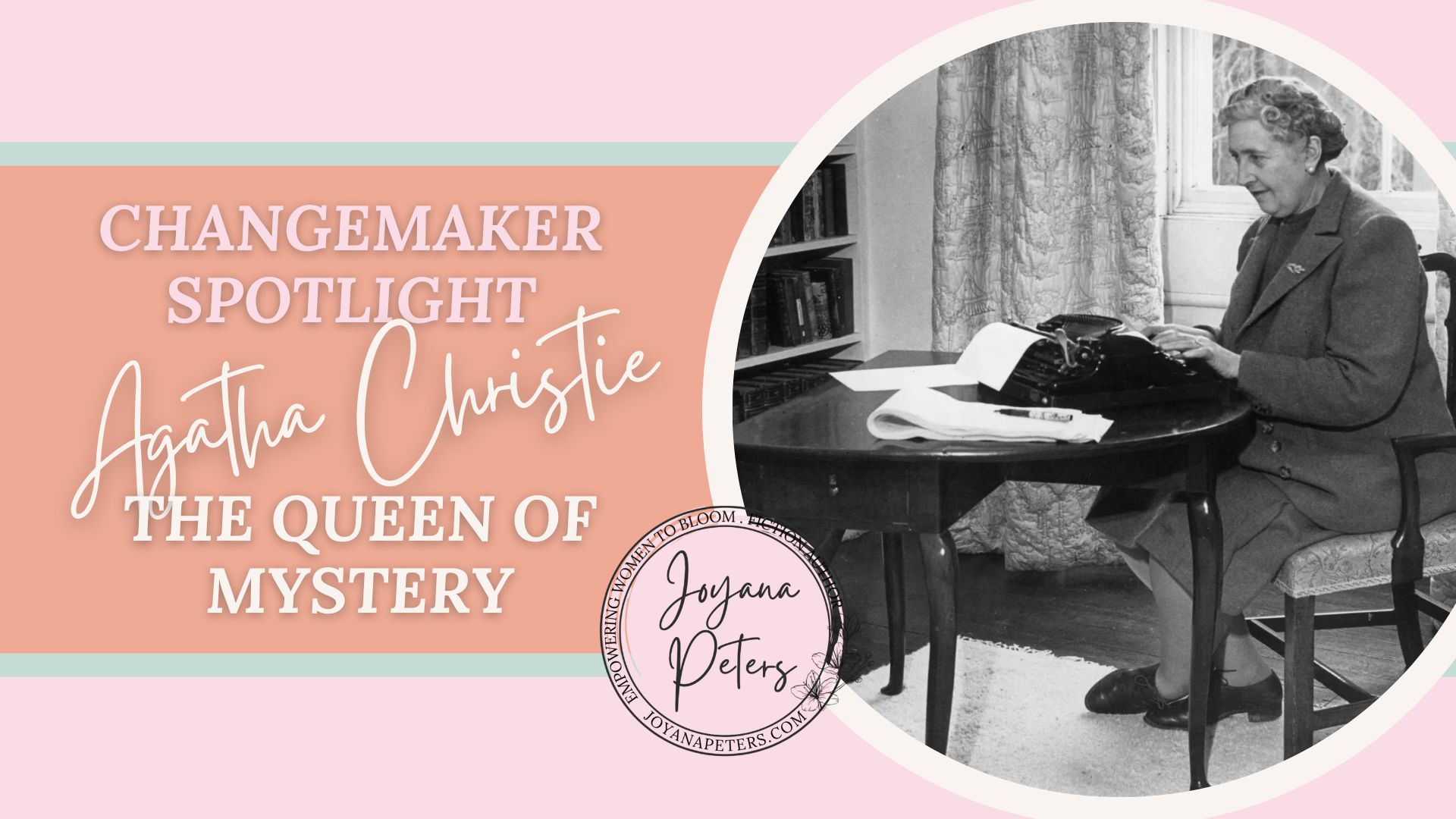
Murder on the Orient Express, And Then There Were None, these are some of the most classic mysteries ever written. And who hasn’t heard of the famous Hercule Poirot or Miss Marple? Agatha Christie books are legendary, as is the author herself. Is that what has made her pop up so much again now in new recent writings? Let’s explore why Agatha Christie is the Queen of Mystery.

Born on September 15th in 1890, Agatha Christie became and remains the best-selling novelist of all time. She was a prolific writer, writing 66 detective novels, 14 short story collections, and the world’s longest running play of all time, The Mousetrap. 

Agatha Christie Quote

Agatha Christie- The Early Years

Agatha Christie had a difficult start in life. She had an unorthodox upbringing where she was homeschooled and told she was not allowed to learn to read until she was at least eight years old. She taught herself at the age of five instead. Her father died when she was eleven and she and her mother were left with major financial problems. They were forced to leave their house relying on the hospitality of friends until eventually traveling to Egypt for Agatha’s “economized” coming out season.

Although Agatha received many marriage proposals in Egypt, it was not until she met a young pilot, Archie Christie, that she first fell in love. It was a whirlwind affair that ended in a wartime marriage.

Agatha Christie Books

It was during the war that Agatha took to writing detective stories. She used her newfound experience in poisons (she worked at a hospital dispensary during the war) as a basis for the plot of her debut novel,The Mysterious Affair at Styles. The murderer’s use of poisons in the book was so accurate that she received an unusual honorable tribute- a review in The Pharmaceutical Journal. 

Despite Agatha’s newfound success, her personal life was in shambles. Her marriage was falling apart, and there were rumors of a nervous breakdown. After a mysterious disappearance, Agatha decided it was time to start anew. She fulfilled a lifelong goal of traveling on the Orient Express, and spent time on an archeological dig in Baghdad. It was there she met a young archeologist in training, Max Mallowan, who became her second husband. 

In the years that followed, Agatha finally found happiness. She and her husband divided their time between England and digs around the world. She devoted her time to writing, enjoying success until her death in 1976.


Agatha Christie Books To Read List

And Then There Were None

“If you’re one of the few who haven’t experienced the genius of Agatha Christie, this novel is a stellar starting point.” — DAVID BALDACCI, #1 New York Times Bestselling Author

An exclusive authorized edition of the most famous and beloved stories from the Queen of Mystery.

Ten people, each with something to hide and something to fear, are invited to an isolated mansion on Indian Island by a host who, surprisingly, fails to appear. On the island, they are cut off from everything but each other and the inescapable shadows of their own past lives. One by one, the guests share the darkest secrets of their wicked pasts. And one by one, they die…

Which among them is the killer, and will any of them survive?

“Agatha Christie is the gateway drug to crime fiction both for readers and for writers. . . .  Just one book is never enough.” — VAL MCDERMID, Internationally Bestselling Author.

Agatha Christie Books

Agatha Christie Books
Why Agatha Christie is the Queen of Mystery

Murder on the Orient Express: A Hercule Poirot Mystery 

The exclusive authorized edition of the most widely read mystery of all time. Now a major motion picture directed by and starring Kenneth Branagh. 

“The murderer is with us—on the train now . . .”

Just after midnight, the famous Orient Express is stopped in its tracks by a snowdrift. By morning, the millionaire Samuel Edward Ratchett lies dead in his compartment, stabbed a dozen times, his door locked from the inside. Without a shred of doubt, one of his fellow passengers is the murderer.

Isolated by the storm, detective Hercule Poirot must find the killer among a dozen of the dead man’s enemies before the murderer decides to strike again.

This edition includes a photo insert of images from the film. 


The Murder of Roger Ackroyd (Hercule Poirot)

One of Agatha Christie’s most famous novels, featuring her beloved detective Hercule Poirot—and her most surprising twist.

The story that made Agatha Christie famous ends with one of her most dramatic twists. The villagers of King’s Abbot are shocked when a wealthy local widow commits suicide, and the very next day her fiancé, Roger Ackroyd, is stabbed to death. Dr. James Sheppard, the local physician, discovers the body of his friend and narrates the ensuing hunt for the killer. All the guests and staff at Ackroyd’s country house seem to have solid alibis—except for his missing stepson. But as the authorities home in on their most obvious suspect, the recently retired detective Hercule Poirot unexpectedly turns up and joins the fray. Dr. Sheppard gamely assists the legendary Poirot as he untangles one of the most fiendish mysteries in Christie’s extensive oeuvre.


Agatha Christie Books
Why Agatha Christie is the Queen of Mystery

The A. B. C. Murders: A Hercule Poirot Mystery

In this official authorized edition from the Queen of Mystery, Hercule Poirot sets out on the trail of a serial killer.

There’s a serial killer on the loose, working his way through the alphabet and the whole country is in a state of panic.

A is for Mrs. Ascher in Andover, B is for Betty Barnard in Bexhill, and C is for Sir Carmichael Clarke in Churston. With each murder, the killer is getting more confident—but leaving a trail of deliberate clues to taunt the proud Hercule Poirot might just prove to be the first and fatal mistake.

FYI: This was the first novel ever to follow the trail of a serial killer in a “whodunnit” mystery.


Sleeping Murder

In this exclusive authorized edition from the Queen of Mystery, the indomitable Miss Marple turns ghost hunter and uncovers shocking evidence of a perfect crime.

Soon after Gwenda moved into her new home, odd things started to happen. Despite her best efforts to modernize the house, she only succeeded in dredging up its past. Worse, she felt an irrational sense of terror every time she climbed the stairs.

In fear, Gwenda turned to Miss Marple to exorcise her ghosts. Between them, they were to solve a “perfect” crime committed many years before.


More Recent books about Agatha Christie-

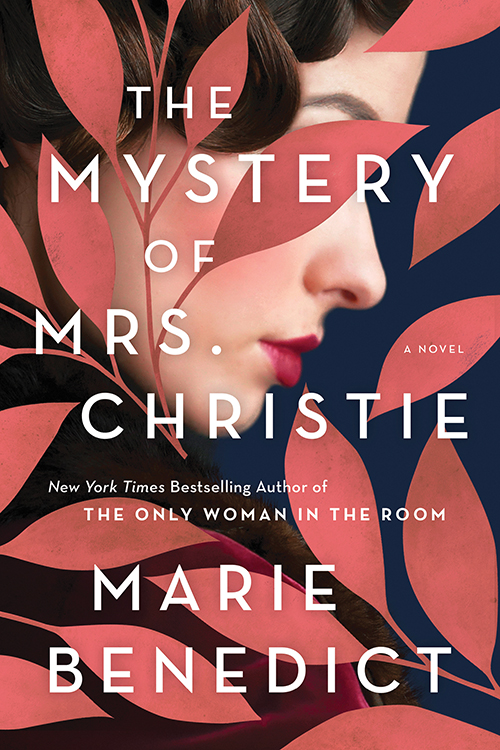
The Mystery of Mrs. Christie by Marie Benedict

THE INSTANT NEW YORK TIMES AND USA TODAY BESTSELLER!

AN AMAZON BEST BOOK OF 2021!

“A stunning story… The ending is ingenious, and it’s possible that Benedict has brought to life the most plausible explanation for why Christie disappeared for 11 days in 1926.”―The Washington Post.

The New York Times and USA Today bestselling author of The Only Woman in the Room returns with a thrilling reconstruction of one of the most notorious events in literary history: Agatha Christie’s mysterious 11-day disappearance in 1926.

In December 1926, Agatha Christie goes missing. Investigators find her empty car on the edge of a deep, gloomy pond, the only clues are some tire tracks nearby and a fur coat left in the car―strange for a frigid night. Her World War I veteran husband and her daughter have no knowledge of her whereabouts, and England unleashes an unprecedented manhunt to find the up-and-coming mystery author. Eleven days later, she reappears, just as mysteriously as she disappeared, claiming amnesia and providing no explanations for her time away.

The puzzle of those missing eleven days has persisted. With her trademark historical fiction exploration into the shadows of the past, acclaimed author Marie Benedict brings us into the world of Agatha Christie, imagining why such a brilliant woman would find herself at the center of such murky historical mysteries.

What is real, and what is mystery? What role did her unfaithful husband play, and what was he not telling investigators?

Agatha Christie novels have withstood the test of time due in no small part to Christie’s masterful storytelling and clever mind that may never be matched, but Agatha Christie’s untold history offers perhaps her greatest mystery of all.

Fans of The Secrets We Kept, The Lions of Fifth Avenue, and The Alice Network will enjoy this riveting saga of literary history, suspense, and love gone wrong.


The Christie Affair by Nina De Gramont

Why would the world’s most famous mystery writer disappear for eleven days? What makes a woman desperate enough to destroy another woman’s marriage? How deeply can a person crave revenge?

“Sizzles from its first sentence.” – The Wall Street Journal

A Reese’s Book Club Pick

In 1925, Miss Nan O’Dea infiltrated the wealthy, rarefied world of author Agatha Christie and her husband, Archie. In every way, she became a part of their life––first, both Christies. Then, just Archie. Soon, Nan became Archie’s mistress, luring him away from his devoted wife, desperate to marry him. Nan’s plot didn’t begin the day she met Archie and Agatha.

It began decades before, in Ireland, when Nan was a young girl. She and the man she loved were a star-crossed couple who were destined to be together––until the Great War, a pandemic, and shameful secrets tore them apart. Then acts of unspeakable cruelty kept them separated.

What drives someone to murder? What will someone do in the name of love? What kind of crime can someone never forgive? Nina de Gramont’s brilliant, unforgettable novel explores these questions and more.


Enjoy this post? Check out more of my favorite booklists with these posts:

Find more ways to spoil your inner bookworm!

Check out the Amaryllis Co. Shop, fully stocked with custom designs perfect for every book loving Amaryllis Girl! From shirts, mugs, wine glasses, and more, I have curated a shop with all of my favorites! SHOP HERE!

Merchandise

Privacy Policy

What Do You Know About Labor Unions?

What Do You Know About Labor Unions?

As an Amazon Associate I earn from qualifying purchases.

The ILGWU- it was so much more than labor protections…

Unions

Labor Unions in US History

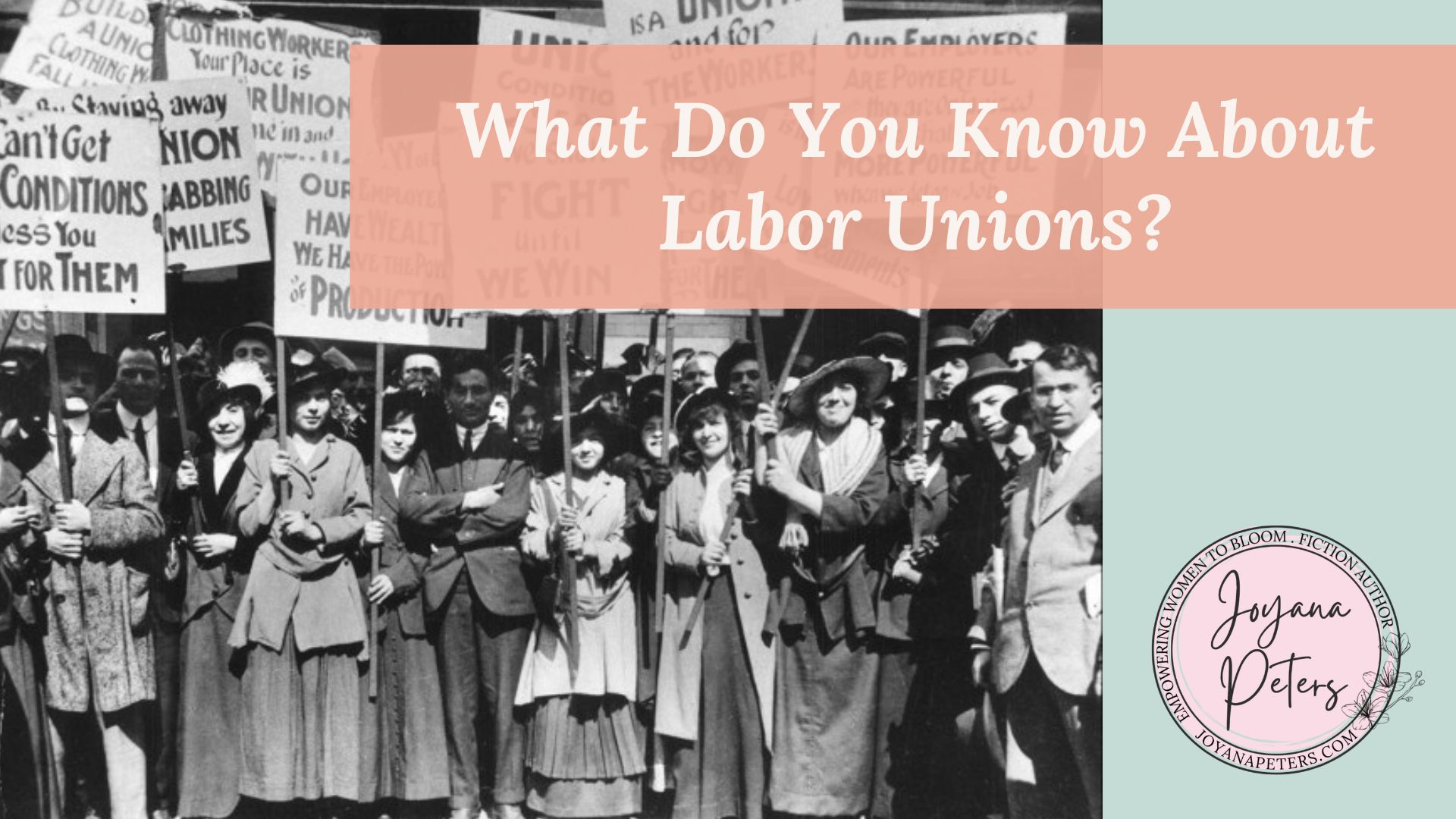
I’m up in New York this week visiting family for two weeks. Yesterday, I got to enjoy a fantastic day in the city with my sister. We visited the Tenement Museum to start research for my next book and got to mozey around the Lower East Side. I even got to visit the Brown Building (aka the site of the Triangle Fire.) It was bittersweet to see it again after spending so much time writing about it these past few years.

One thing that really struck me as I went on this past tour and learned about the next phase of history for immigrants on the Lower East Side, was the rising role the International Ladies’ Garment Worker’s Union played for workers and their families.

When we think of labor unions. we think of the role they play in protecting workers’ rights. Negotiating fair pay and hours, protections etc. However, the ILGWU did FAR more than that.

One thing to remember was the Lower East Side of Manhattan was the Garment District. So, a large majority of residents had someone in their family working in a garment factory and therefore an affiliation with the union.

In the aftermath of the Garment Worker’s Strike and the Triangle fire in 1911 the union strengthened substantially. For one, it grew in its reach across other urban areas across the country. And as its reach and membership numbers grew, the union was able to focus on improving other quality of life issues for members and their families.

In 1913 they opened the first Union Health Center in NYC. They soon opened additional centers in other cities across the county and eventually offered mobile health centers to workers in smaller towns and rural areas. At the centers they offered dental care, check ups, and prescriptions to workers and their families.

By 1915 the union began to offer educational opportunities to its members. They offered coursework ranging from English classes to labor history classes. They partnered with high schools and colleges to offer incentives for members to earn credits and diplomas and eventually even offered scholarships for college education.

By 1919, there were even vacation getaways available in the Poconos and Catskills for families to escape busy city life.

These safety net offerings were integral to survival for many of these families. This was especially evident during the Depression era where many men were unable to find jobs and women stepped up to provide the bread-winning role and support for the family. 

It’s always interesting to me to look back in history and see how a story changed. Seeing what labor unions offered and how accepting people were of these offerings, it is difficult to imagine how far in opinion and reputation the pendulum could swing in its depiction of labor unions. How and when did that occur? And why? Fear? Slander?

It makes you wonder how fifty years from now our current times will be depicted. ..

Did you enjoy this article? Here are a few more reads that you may be interested in!

US IMMIGRATION HISTORY FI

U.S. Immigration History- How Much Do You Know About It?

As an Amazon Associate I earn from qualifying purchases.

I updated this post in 2024 as I was writing The Woman in the Newsroom. It now explains why Ruth needed to involve herself in the fight for an open U.S. Immigration policy.

U.S. Immigration History Statue of Liberty

U.S. Immigration History’s Dual Nature

If you read The Girl From Saint Petersburg, you’ve seen I included Emma Lazarus’s famous poem, The New Colossus, in the beginning. I love this poem and have always found it intriguing. It’s welcoming, yet imposing nature. Just like the Statue itself. I went to the Statue of Liberty on a class field trip in the fourth grade. The Statue’s face freaked me out. How could this welcoming “symbol” have such an unfriendly looking face? As an adult, I now find the statue’s “split personality” to be that much more intriguing and symbolic of U.S. Immigration History itself.

Yes, the Statue carries Lazurus’s famous lines. They’re synonymous with U.S. immigration history. We’re the Melting Pot Nation, right? “Give me your tired, your poor, your huddled masses yearning to breathe free.” But how much of that is true? Did we really welcome ALL immigrants with open arms?

Our TRUE U.S. Immigration History

In reality, many would view U.S. immigration history as biased. Our nation’s complicated welcoming/exclusionary stances go far further back than many of us realize. Immigration limits began as far back as 1790. That is when Congress passed the first law dictating that only free white people of “good character” living in the U.S. for two years or longer could apply for citizenship.

The years following stirred up more distrust as immigrants from different parts of Europe continued to arrive. Divisions began and America’s first anti-immigrant political party formed by 1849. They drummed up support for the states to pass their own anti-immigration laws. But the Supreme Court overturned them in 1875, declaring only the federal government could make and enforce immigration laws.

Then the REAL Exclusions began…

The Chinese Exclusion Act passed in 1882. This was the first act in U.S. immigration history to place broad restrictions on a certain group. However, it was far from the last. By 1891, immigration policies expanded to exclude polygamists, people convicted of certain crimes, and the sick and diseased. The Federal Office of Immigration also began along with stationing immigration inspectors at all ports of entry.

Xenophobia reached new heights at the start of the World Wars. The U.S. wanted no trouble and turned insular. The Immigration Act of 1917 established a literacy requirement for all immigrants and halted almost all immigration from Asian countries completely.

Where The Girl in the Newsroom Begins

Harding became president in January of 1921. Soon after he proposed a national quota system. The Immigration Restriction Act (also called the Emergency Quota Act) passed as a temporary measure in 1921. However, it proved to be the “turning point” in U.S. immigration history.

U.S. Immigration Quote

For the first time it added numerical limits on immigration and created the use of a calculating quota system called the National Origins Formula. Harding became president in January of 1921. Soon after he proposed a national quota system. The Immigration Restriction Act (also called the Emergency Quota Act) passed as a temporary measure in 1921. However, it proved to be the “turning point” in U.S. immigration history. For the first time it added numerical limits on immigration and created the use of a calculating quota system called the National Origins Formula.The system calculated and allowed new immigrants into the country based on the number of current immigrants with those origins currently in the United States. Therefore, the formula favored Northern and Western European countries allowing immigrants from these areas to account for 70% of the issued visas.

Politicians, journalists (like Ruth), religious leaders, you name it, all fought against the Immigration Restriction Act. However, they renewed the Act each year. In 1924, the Immigration Act became a permanent law with additional restrictions.

The 1924 Immigration Restriction Act

The finalized law not only continued to heavily favor Northern and Western European countries, it also lowered the existing calculating quotas! They pushed back the origin year the calculations used. Instead of calculating from current numbers of immigrants in the country, the quota was calculated based off the number in the country in 1890. This further biased against immigrants from other parts of the world. The Act also established a new U.S. Border Patrol to crack down on illegal immigrants crossing the borders from Mexico and Canada.

The quota system remained in place until 1965 when Lyndon Johnson overturned it with a new seven-category preference system. He called the old quota system “unAmerican,” and said the new bill would correct a “cruel and enduring wrong in the conduct of the American nation.”

U.S. Immigration Today

My last installment of Ruth’s story will take place during the time of this quota system and initial resistance. As I’ve begun research for it, my stomach has turned at the horrors we allowed in refusing refugees from Holocaust concentration camps etc.

I’m appreciative of Johnson’s apology, but I find myself still wondering at the complexities of our system. How much better are we doing? Will we ever have an immigration system that is truly equitable and fair? And most importantly, will we ever have an agreed upon definition of what it means to be an American?

Enjoy this post? Here are a few more than may interest you!

Find more ways to spoil your inner bookworm!

Check out the Amaryllis Co. Shop, fully stocked with custom designs perfect for every book loving Amaryllis Girl! From shirts, mugs, wine glasses, and more, I have curated a shop with all of my favorites! SHOP HERE!

Merchandise

Privacy Policy

Juneteenth

Check Out My Juneteenth Book List!

As an Amazon Associate I earn from qualifying purchases.

Books to Commemorate Freedom on this important day in history!

Juneteenth

Juneteenth commemorates the official end of slavery in the United States.

On June 19th, 1865 federal troops arrived in Galveston, TX to take control of the state and ensure all enslaved people be freed. The troops’ arrival was a full two and a half years after the Emancipation Proclamation was signed.

Juneteenth celebrates this momentous day and is finally a federal holiday! In the spirit of celebration, I’ve put together a Juneteenth Book List below. Happy Reading!


Juneteenth Book List

On Juneteenth

On Juneteenth by Annette Gordon-Reed

The essential, sweeping story of Juneteenth’s integral importance to American history, as told by a Pulitzer Prize–winning historian and Texas native.

Weaving together American history, dramatic family chronicle, and searing episodes of memoir, Annette Gordon-Reed’s On Juneteenth provides a historian’s view of the country’s long road to Juneteenth, recounting both its origins in Texas and the enormous hardships that African-Americans have endured in the century since, from Reconstruction through Jim Crow and beyond.

All too aware of the stories of cowboys, ranchers, and oilmen that have long dominated the lore of the Lone Star State, Gordon-Reed―herself a Texas native and the descendant of enslaved people brought to Texas as early as the 1820s―forges a new and profoundly truthful narrative of her home state, with implications for us all.


Juneteenth: A Novel by Ralph Ellison

The radiant, posthumous second novel by the visionary author of Invisible Man.

In Washington, D.C., in the 1950s, Adam Sunraider, a race-baiting senator from New England, is mortally wounded by an assassin’s bullet while making a speech on the Senate floor. To the shock of all who think they know him, Sunraider calls out from his deathbed for Alonzo Hickman, an old black minister, to be brought to his side. The reverend is summoned; the two are left alone. “Tell me what happened while there’s still time,” demands the dying Sunraider.

Out of their conversation, and the inner rhythms of memories whose weight has been borne in silence for many long years, a story emerges.

Juneteenth

Senator Sunraider, once known as Bliss, was raised by Reverend Hickman in a black community steeped in religion and music (not unlike Ralph Ellison’s own childhood home) and was brought up to be a preaching prodigy in a joyful black Baptist ministry that traveled throughout the South and the Southwest. Together one last time, the two men retrace the course of their shared life in an “anguished attempt,” Ellison once put it, “to arrive at the true shape and substance of a sundered past and its meaning.” In the end, the two men confront their most painful memories, memories that hold the key to understanding the mysteries of kinship and race that bind them, and to the senator’s confronting how deeply estranged he had become from his true identity.


Reconstruction Era

Reconstruction by Eric Foner

The prize-winning classic work on the post-Civil War period that shaped modern America.

Eric Foner’s “masterful treatment of one of the most complex periods of American history” (New Republic) redefined how the post-Civil War period was viewed.

Reconstruction chronicles the way in which Americans—black and white—responded to the unprecedented changes unleashed by the war and the end of slavery.

It addresses the ways in which the emancipated slaves’ quest for economic autonomy and equal citizenship shaped the political agenda of Reconstruction; the remodeling of Southern society and the place of planters, merchants, and small farmers within it; the evolution of racial attitudes and patterns of race relations; and the emergence of a national state possessing vastly expanded authority and committed, for a time, to the principle of equal rights for all Americans.


Envisioning Emancipation by Deborah Willis and Barbara Krauthamer

The Emancipation Proclamation is one of the most important documents in American history. As we commemorate its 150th anniversary, what do we really know about those who experienced slavery?

In their pioneering book, Envisioning Emancipation, renowned photographic historian Deborah Willis and historian of slavery Barbara Krauthamer have amassed 150 photographs—some never before published—from the antebellum days of the 1850s through the New Deal era of the 1930s.

Envisioning Emancipation by Deborah Willis and Barbara Krauthamer

The authors vividly display the seismic impact of emancipation on African Americans born before and after the Proclamation, providing a perspective on freedom and slavery and a way to understand the photos as documents of engagement, action, struggle, and aspiration.

Filled with powerful images of lives too often ignored or erased from historical records, Envisioning Emancipation provides a new perspective on American culture.

Happy Juneteenth Everyone! Hope this Juneteenth Book List helps you learn a bit more about what we’re celebrating and the history behind it.

Find more ways to spoil your inner bookworm!

Check out the Amaryllis Co. Shop, fully stocked with custom designs perfect for every book loving Amaryllis Girl! From shirts, mugs, wine glasses, and more, I have curated a shop with all of my favorites! SHOP HERE!

Merchandise

Privacy Policy