Lucy Burns

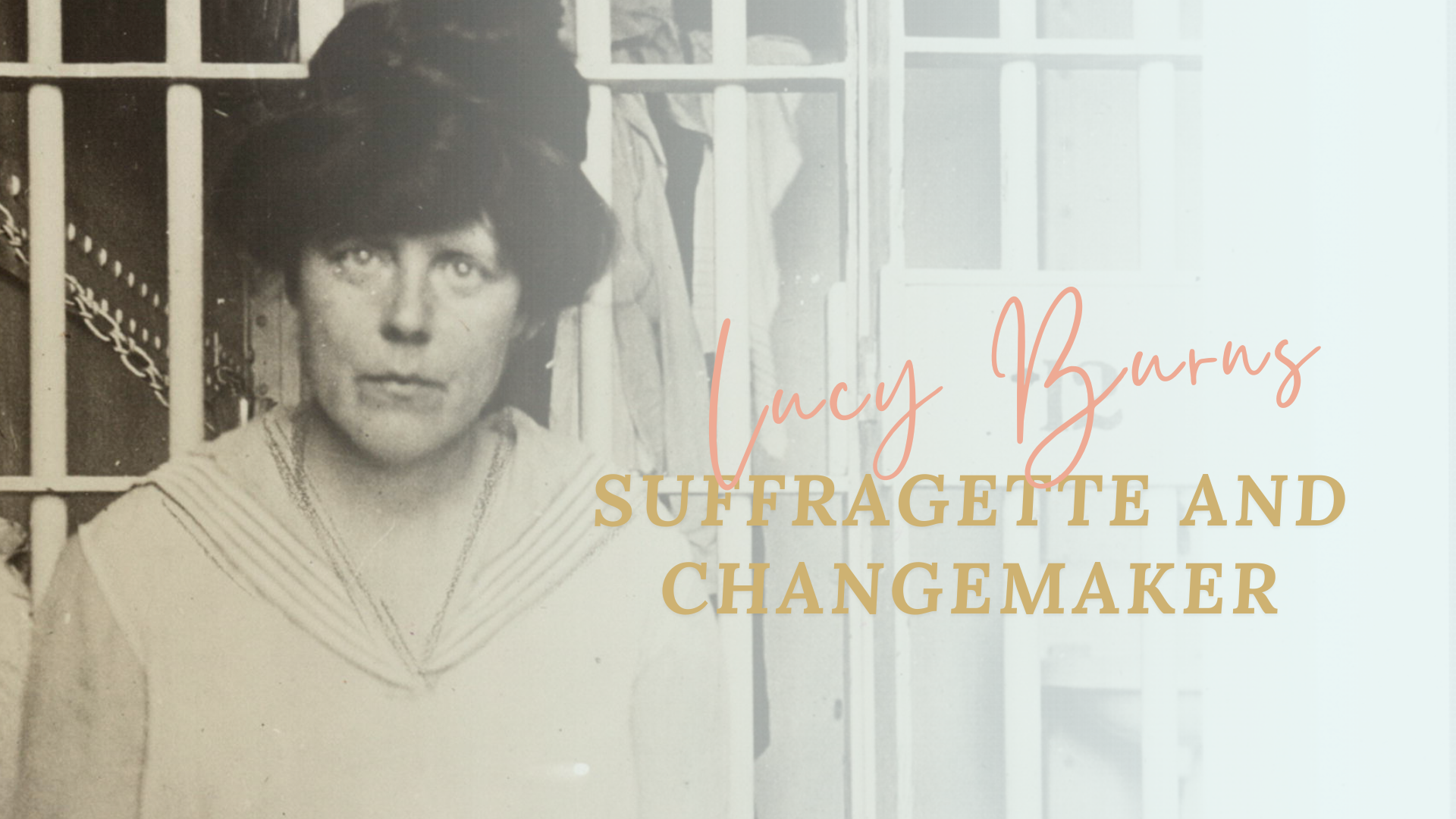
Lucy Burns: Suffragette and Changemaker

Lucy Burns- American suffragette and woman’s rights activist.

Inspiration and Friendships

Lucy Burns advocacy efforts began when she spent time in the UK working with Emmeline Pankhurst and the Women’s Social and Political Union.She joined their protests and was arrested for the first time. While there, she also met activist Alice Paul. The two bonded over the inactivity of American suffragettes and their respect for the more militant strategies of the UK suffragette movement.

The Congressional Committee

Upon their return to the U.S, Burns and Paul became the heads of the Congressional Committee of the National American Women Suffrage Association. Both women felt strongly that the best way to ensure woman’s suffrage was to advocate on the federal level for a suffrage amendment.This was a controversial issue in the NAWSA with many willing to settle for guaranteed victories on the state level, while others wanted to “go big or go home” refusing to settle until there was a federal level victory of woman’s suffrage for all.

NAWSA leaders were nervous about approving the Committee or many of its proposed advocacy ideas. They did, at least, approve a suffrage parade which Burns and Paul organized for the day before newly elected Woodrow Wilson’s Inauguration Day. See my other blog post on the March on Washington for further details about this event. NAWSA’s one stipulation was that the Congressional Committee would receive no further funding from NAWSA. This was the beginning of Burns and Paul’s split from NAWSA.

Lucy Burns and The National Woman’s Party

Burns and Paul split from NAWSA and formed their own suffrage group called the Congressional Union. This caused further controversy and divisiveness within the suffrage movement. Many felt threatened by Burns and Paul’s more militant tactics and that they’d alienated political supporters. Eventually Burns and Paul created their own political party called the National Woman’s Party.They felt this was the best way to guarantee direct action in fighting for women’s rights. Their sole goal was the federal right to vote.

In 1917 the NWP led a protest in front of the White House. The women were called the Silent Sentinels and were arrested and sent to the Occoquan Workhouse.

Life in Prison

Burns and Paul led the arrested women in hunger strikes to continue protesting their cause from prison. She led a number of continued protests from prison including circulating a document that defined the status of a political prisoner and alerting the women to their rights. She was eventually put in solitary confinement.

Conditions worsened but the women refused to give up their cause. Eventually, Burns and the women were forced to face what became known as the “Night of Terror”.

The women were beaten and refused medical treatment. Burns continued to call out and reassure the other women despite numerous threats. Eventually guards handcuffed her hands over her head to her cell door and left her that way for the rest of the night. In solidarity, the rest of the suffragette prisoners all held their hands in the same position and stood there with her.

The Aftermath of the “Night of Terror”

After enduring the “Night of Terror” the women conducted another hunger strike for the following three days. The warden eventually moved Burns to another block and ordered her to be force fed. They required five people to hold her down and when she refused to open her mouth, they eventually forced a tube up her nostril.

The Final Push for Suffrage

Burns, Paul and other advocates continued to lobby for votes to pass the federal amendment for woman suffrage. They were once again jailed after another protest at the White House in 1918. After being treated horribly in prison again they were finally released shortly before the next election. They decided their sole focus needed to be on getting anyone in Congress who supported suffrage. This was the first time they focused on candidates outside the Democratic Party. It worked and they cost Democrats their majority in Congress.

By this point tensions between the suffragettes and Wilson were at an all-time high. He realized something needed to be done, especially after all the negative publicity from the protests, arrests and recent election. He requested a special assembly of Congress in May of 1919.

On May 21st the House passed the Susan B. Anthony amendment. The Senate passed it on June 4th. Although the amendment was passed, the suffragettes still had to make sure 3/4 of the states agreed to ratify it. Finally on August 18, 1920, Tennessee became the thirty-sixth state to ratify the Anthony Amendment. The quest for federal suffrage was finally over.

Lucy Burns’ Legacy

Of all the suffragettes from this era, Lucy Burns spent the most time in prison. Once Tennessee ratified the Amendment, Burns was quoted as saying “I don’t want to do anything more. I think we have done all this for women, and we have sacrificed everything we possessed for them, and now let them fight for it now. I am not going to fight anymore.” She retired from political life and spent the rest of her time with her orphaned niece until her death in 1966.

Lucy Burns was named an honoree by the National Women’s History Alliance in 2020. The Lucy Burn Museum also opened to the public in January 2020 at the former site of the Occoquan Workhouse where the “Night of Terror” took place. The museum commemorates Burns and the other suffragettes and their sacrifices in the fight for suffrage.

I am so honored to speak at the Lucy Burns Museum this weekend and honor these women for Women’s History Month. I hope you can join me or stay tuned for the replay of the event soon in my VIP Member section.

Check out more of my Changemaker articles below!

Find more ways to spoil your inner bookworm!

Check out the Amaryllis Co. Shop, fully stocked with custom designs perfect for every book loving Amaryllis Girl! From shirts, mugs, wine glasses, and more, I have curated a shop with all of my favorites! SHOP HERE! You can also find my collection of bookish merchandise on Etsy.

Merchandise

Privacy Policy

Betty Friedan

Changemaker Spotlight: Betty Friedan

As an Amazon Associate I earn from qualifying purchases.

Suburban Secrets and Archival Truths: Why Betty Friedan Still Matters

When we think of the “Changemakers” who paved the way for the modern woman, we often think of the suffragettes of the 1910s. But there is another wave of revolution that happened in the 1960s—a revolution sparked by a single book, a seafoam-green typewriter, and a woman named Betty Friedan.

“The Problem That Had No Name”

In 1963, a year that feels both like a lifetime ago and just yesterday, Betty Friedan published The Feminine Mystique. Before she was a world-renowned activist and co-founder of NOW (The National Organization for Women), she was a journalist and a mother who began to notice a quiet, simmering dissatisfaction among her peers.

She called it “the problem that had no name.” It was that nagging feeling many suburban housewives had— a feeling that, despite having the “perfect” home, husband, and children, something was missing. Betty Friedan didn’t just identify the problem; she gave women permission to acknowledge it without guilt.

The Sisterhood of “Troublesome Women”

This era is captured so vividly in one of my favorite recent reads, The Book Club for Troublesome Women by Marie Bostwick. Set in 1963, the story follows four very different women who form a book club. Their first pick? Betty Friedan’s newly released The Feminine Mystique.

Much like the real women influenced by The Feminine Mystique in the 1960s, the characters in the book realize that their secret longings for a life outside the home aren’t “wrong”— they are a sign of a shifting world. I love how Bostwick shows that while the research of Betty Friedan was the catalyst, it was the sisterhood and the courage to be “troublesome” that actually changed their lives.

“History tells us what people do: historical fiction helps us imagine how they felt.” — Guy Vanderhaeghe

Reading about “The Bettys” in Bostwick’s novel made me feel the stifling reality of 1963— a time when a woman couldn’t even open a bank account without her husband’s signature— and it made me appreciate the scholarly work of Betty Friedan all the more.

Betty Friedan

The Legacy of NOW and Activism

Friedan didn’t stop at writing. She knew that for feelings to become progress, there needed to be action. In 1966, she co-founded the National Organization for Women (NOW) to push for equal pay and an end to sex discrimination in the workplace.

While Betty Friedan was often considered “troublesome” herself, that is exactly what makes her a Changemaker. She challenged the status quo so that women like us could have the freedom to be authors, scientists, and leaders.


Are you a “Troublesome Woman”?

Did the words of Betty Friedan change your outlook, or have you read The Book Club for Troublesome Women? I’d love to hear your thoughts in the comments!

Want to celebrate your own inner Changemaker? Check out the Amaryllis Co. Shop for custom designs inspired by the women who changed history!

Like this Changemaker Spotlight? Be sure to check out my other Changemaker Spotlights Here!

Find more ways to spoil your inner bookworm!

Check out the Amaryllis Co. Shop, fully stocked with custom designs perfect for every book loving Amaryllis Girl! From shirts, mugs, wine glasses, and more, I have curated a shop with all of my favorites! SHOP HERE! You can also find my collection of bookish merchandise on Etsy.

Merchandise

Privacy Policy

Black Freedom Fighters

Female Civil Rights Leaders

As an Amazon Associate I earn from qualifying purchases.

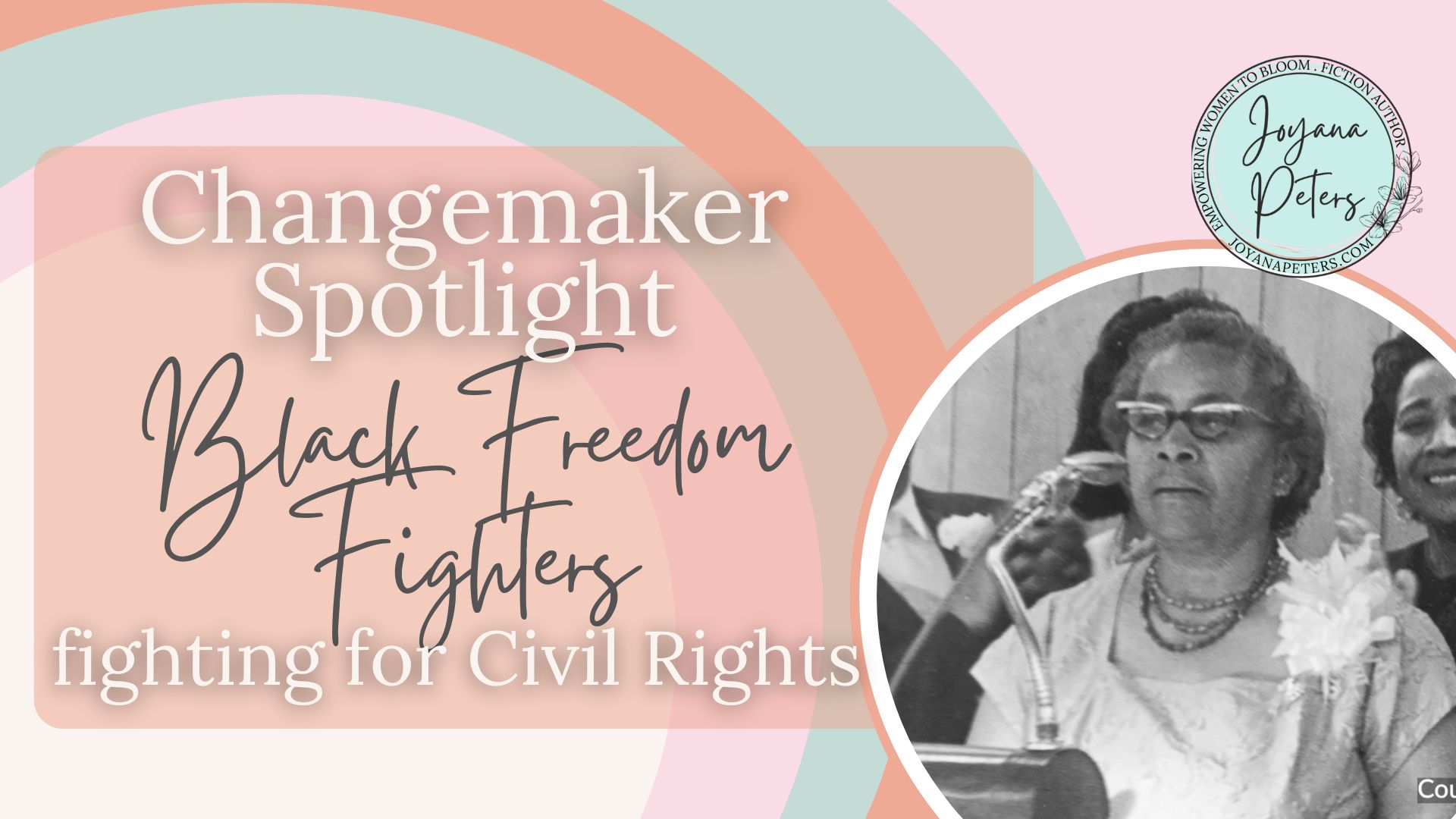
Let’s honor some of the courageous Female Civil Rights Leaders!

Female Civil Rights Leaders

In honor of MLK Day, I wanted to write about the fight for civil rights and equality. But as so many things in history, I feel there is a lack of acknowledgement for some of the amazing women who contributed to this fight. So today, let’s shine a light on some amazing Female Civil Rights Leaders!

Septima Clark

Septima Clark was a public school teacher in South Carolina for thirty years. Ultimately, she lost her position in 1956 after she bravely refused to renounce her involvement with the NAACP

Believing literacy to be the key to political empowerment, she went on to set up workshops to teach others basic literacy skills, the rights and responsibilities of U.S. citizens and how to fill out voter registration forms.

She continued teaching and advocating for civil responsibilities for the rest of her life. She taught and developed curriculum at key places like the Highlander Folk School for social advocacy, the Southern Christian Leadership Conference and the American Field Service.

In 1975, she won a seat on the South Carolina School Board, marking a major milestone in her career. Just a year later, the South Carolina governor issued a formal letter of apology to her and officially reinstated her pension.

Her influence continued to grow on the national stage. By 1979, President Jimmy Carter recognized her historic contributions by presenting her with a Living Legacy Award. That same year, she published her autobiography, detailing her courageous journey and her pivotal role within the Civil Rights Movement. You can check it out below!

Female Civil Rights Leaders

Amelia Boynton Robinson

Amelia Boynton Robinson was an activist leader in the American Civil Rights Movement. She was a key figure in the Selma to Montgomery marches in 1965. In 1990, she received the Martin Luther King Jr. Freedom Medal for her lifelong commitment to civil rights

Boynton began her activism in 1934 when she registered to vote, a difficult task in Alabama at the time. A few years later she wrote a play called Through the Years, that recounted her father’s half-brother’s story. He rose from slavery to serve in Congress during the Reconstruction Era.

In 1958, police arrested her son after he attempted to buy food from a white-only counter in a bus terminal. Although the state court found him guilty of a misdemeanor and issued a fine, he refused to let the matter rest. As a law student at Howard University, he appealed the decision himself. Despite losing the initial rounds, he eventually took his fight all the way to the Supreme Court. In the landmark case Boynton v. Virginia, Thurgood Marshall successfully argued the appeal, leading the Court to reverse the conviction.

In 1964 Boynton ran for Congress hoping to encourage black registration and voting. She was the first female African American to run for office in Alabama and the first woman of any race to run on the Democratic Party ticket for the state. She received 10% of the vote.

In 1965 Boynton began working with Martin Luther King Jr. and other leaders to plan demonstrations for voting and civil rights. She helped organize a march to Montgomery which took place on March 7th, 1965. The event became known as Bloody Sunday when police stopped and beat the demonstrators. Boynton was beaten unconscious, a photo of her lying on Edmund Pettus Bridge went around the world and is still one of the most famous photographs from the march today.

To learn more about Boynton read one of the books below- including her own Bridge Across Jordon!


Nine More Amazing Female Civil Rights Leaders

Are you familiar with Leah Chase or Dr. June Jackson Christmas? What about Aileen Hernandez or Diane Nash? Sadly, they along with Judy Richardson, Kathleen Cleaver, Gay McDougall, Gloria Richardson, and Myrlie Evers have been mostly left out of the history books. Until now!

Female Civil Rights Leaders

Nominated for a 50th NAACP IMAGE Award for Outstanding Literary Work – Debut Author, Lighting the Fires of Freedom is a MUST Read to learn more about overlooked women from the Civil Rights Movement.

Janet Dewart Bell put together these women’s stories from collections of oral narratives and photographs. Each of these women answered the call to fight for freedom with passion, courage, and persistence.

If you’re interested in getting a close look at the women who were on the front lines during this movement- you need to read Bell’s book!

If you enjoyed this historical highlight, here are a few more you may want to read!

Find more ways to spoil your inner bookworm!

Check out the Amaryllis Co. Shop, fully stocked with custom designs perfect for every book loving Amaryllis Girl! From shirts, mugs, wine glasses, and more, I have curated a shop with all of my favorites! SHOP HERE! You can also find my collection of bookish merchandise on Etsy.

Merchandise

Privacy Policy

Harriet Stratemeyer Adams

Carolyn Keene- The Hidden Changemaker

As an Amazon Associate I earn from qualifying purchases.

The Real Mystery: Who REALLY wrote Nancy Drew?

Nancy Drew

Who was Carolyn Keene?

We all know Nancy Drew—she’s smart, she drives a cool car, and she’s the ultimate inspiration for independent women everywhere. However, there’s a secret behind the Nancy Drew series. The woman who truly made Nancy the icon we love today was operating in plain sight for fifty years, completely uncredited.

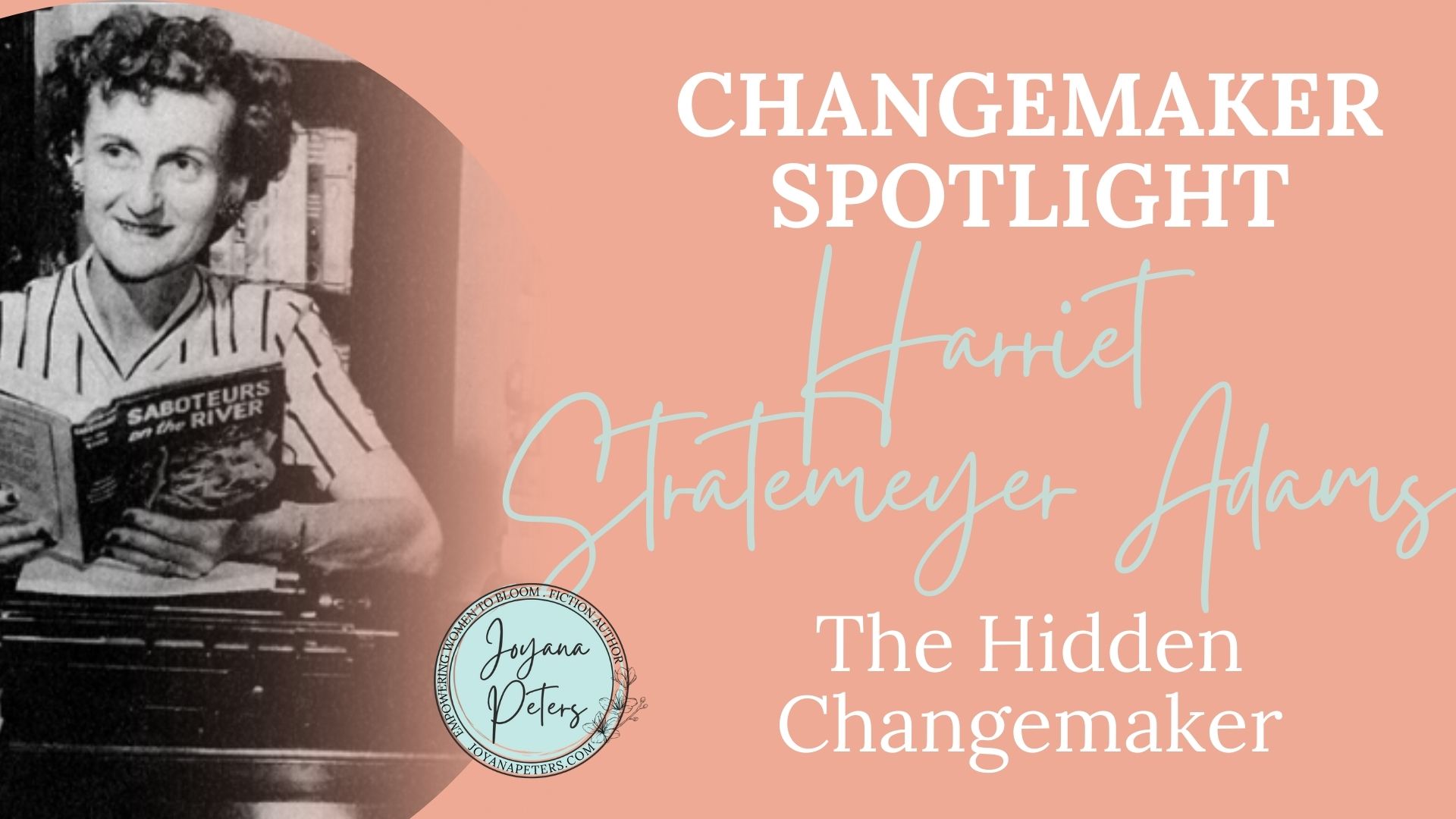
Forget the official name, Carolyn Keene. The actual literary powerhouse who secured Nancy’s legacy was Harriet Stratemeyer Adams. Her story is pure Changemaker gold, proving that the most influential figures often work behind the curtain!

The Unexpected Heir

Harriet didn’t plan on becoming a publishing legend. She was a teacher and musician, but life had other plans. Her father, Edward Stratemeyer, ran the massive Stratemeyer Syndicate, a company famous for creating popular series like The Hardy Boys and, yes, Nancy Drew. The Syndicate’s unique model involved hiring ghostwriters to produce books from detailed outlines, all published under those famous pseudonyms.

The crisis hit hard in 1930 when Edward died unexpectedly, right after the first few Nancy Drew books were released. Everyone thought the Syndicate—and the teenage sleuth—was toast.

But Harriet, along with her sister Edna, stepped up. While Edna handled the books, Harriet took on the far bigger task: becoming the chief creative mind and author of their most valuable characters.

Nancy Gets a Makeover (and a New Attitude)

For the next five decades, Harriet wasn’t just managing. She was writing. Harriet penned or heavily edited nearly 200 of the Syndicate’s titles, defining the definitive voice of “Carolyn Keene.”

Harriet Adams fundamentally changed Nancy Drew for the better:

She Made Her Relatable: Harriet took the initial 1920s thrill-seeker and transformed her into the poised, responsible, and clever detective we cherish. Nancy always had her own money, her own friends, and, crucially, she drove her own car—a huge statement of independence!

Nancy Became Timeless: As the decades marched on, Harriet understood that books had to evolve. She orchestrated a massive project to “revise” the older novels. This included updating the language to ensure Nancy’s style felt modern, also removing outdated references and stereotypes. She kept Nancy relevant generation after generation.

The Power of the Hidden Hand

Harriet Adams’s story is incredible because she was one of the most commercially successful and prolific authors in history. And yet, she chose to remain in the shadows. For fifty years, she was the engine that kept the most popular girls’ series in the world running, without a single public nod of recognition.

Her journey teaches us an invaluable lesson: Changemaking isn’t always about being on the cover of a magazine. True impact comes from a fierce, unyielding commitment to nurturing and improving a vision. Harriet Adams proved that being the quiet, consistent force behind the success can be the greatest achievement of all, turning a fictional character into a timeless, global inspiration.

Enjoy reading about incredible Changemakers? Here are a few more you should get to know:

Find more ways to spoil your inner bookworm!

Check out the Amaryllis Co. Shop, fully stocked with custom designs perfect for every book loving Amaryllis Girl! From shirts, mugs, wine glasses, and more, I have curated a shop with all of my favorites! SHOP HERE! You can also find my collection of bookish merchandise on Etsy.

Merchandise

Privacy Policy

Toni Morrison

Toni Morrison: First Black Woman Nobel Laureate

As an Amazon Associate I earn from qualifying purchases.

On October 8th, 1993, the world of literature shifted. That day, Toni Morrison became the first Black woman to be awarded the Nobel Prize in Literature—a monumental achievement that forever cemented her status as a literary giant and global changemaker.

This wasn’t just a win for her; it was a win for every voice that had been told their story was too niche, too specific, or simply not “universal” enough. Morrison didn’t just write novels; she fundamentally changed what the American story was allowed to be.

She Didn’t Just Write Books, She Built the Shelf

Born Chloe Wofford, Toni Morrison had a profound understanding of language, but she was a changemaker long before she got the call from Sweden. In the 1960s, she took a job as an editor at Random House. That job was a battlefield.

She worked tirelessly to overcome the industry’s outdated stereotypes—the ones that constantly underestimated Black authors and Black stories. As an editor, she was a one-woman literary movement, bringing revolutionary works by authors like Angela Davis and Gayl Jones out of the shadows and onto the national stage. She advocated for a diverse canon while secretly pouring her own genius onto the page.

Toni Morrison

Her first novel, The Bluest Eye (1970), dropped like a truth bomb. Her writing was lyrical, tough, and centered unflinchingly on the Black experience, especially Black women’s lives. She never softened her prose or explained her characters for a white audience. She basically said, “This is the story. Understand it.”

A Voice that Demanded Listening

By the time 1993 rolled around, Morrison had given us masterpieces like the epic Song of Solomon and the devastating, Pulitzer Prize-winning Beloved. Her novels don’t just tell stories; they use myth, history, and raw emotion to grapple with trauma, memory, and what it truly means to survive.

When the Swedish Academy announced the Nobel, recognizing her work for its “visionary force and poetic import,” it was a watershed moment. It wasn’t just validating one woman; it was validating an entire body of work and a cultural perspective that had long been marginalized.

Morrison didn’t shrink from the spotlight. She used that platform to talk about everything that mattered: the power of language, the danger of racism, and the necessity of literature that makes you uncomfortable. She traveled, taught, and championed the idea that when you finally center stories about women and people of color, the entire literary world gets stronger, richer, and more honest.

What She Left Us: A Legacy That Won’t Quit

Morrison’s impact did not end with the prize. She continued to write, publish, and teach for decades, serving as a revered professor at Princeton University. Her work became mandatory reading in schools and universities across the world, establishing a new standard for American literature.

She paved the way for countless writers who followed, proving that a writer could be intensely focused on a specific cultural experience and yet achieve universal acclaim. She was awarded the Presidential Medal of Freedom in 2012, and her funeral, upon her death in 2019, was attended by leaders and artists, all acknowledging the seismic shift she created. She had an all-star honor guard of ten great works, each one a monument to a life dedicated to literature.

Toni Morrison’s journey demonstrates the profound power of using one’s unique voice—a voice that, once raised, can change the entire cultural landscape.

Find more ways to spoil your inner bookworm!

Check out the Amaryllis Co. Shop, fully stocked with custom designs perfect for every book loving Amaryllis Girl! From shirts, mugs, wine glasses, and more, I have curated a shop with all of my favorites! SHOP HERE! You can also find my collection of bookish merchandise on Etsy.

Merchandise
Alice Stebbins Wells

First Female Police Officer: Changemaker Spotlight

As an Amazon Associate I earn from qualifying purchases.

Alice Stebbins Wells was a minister and social worker who in 1910 became the first female police officer appointed to the Los Angeles Police Department. Although she was not technically the first female officer in the United States, she was the first of female police officers to hold arrest privileges and she was a national trailblazer for getting women allowed on police forces.

Wells worked hard to overcome gender stereotypes and barriers to women working on the police force. At the time, women who worked in law enforcement were only allowed to be matrons overseeing female inmates and juveniles. In May of 1910, Wells drafted a petition and obtained signatures before bringing it to the mayor of Los Angeles, the police commissioner and city council to demand she be appointed as a female police officer. The petition succeeded and she was appointed the following fall.

Paving a Road to a Stronger Force

Her initial months on the job were bumpy. She had to overcome disrespect and confusion with the idea of a woman on the force. One of the usual perks of the job was being allowed to ride the trolley for free. However, she was kicked off the trolley after being accused of wearing her husband’s badge. This was eventually rectified as she was issued a new badge with the title “Policewoman No. 1.” 

She also had to deal with derisive newspaper reporting. Article headlines mocked her with titles like “Officerette, Officeress, and first woman policeman.” Instead of bowing down, Wells demanded acceptance and gave an exclusive interview to the Los Angeles Times. There she stated, “This is serious work and I do hope the newspapers will not try to make fun of it.”

Female police officers Alice Stebbins Wells

Wells continued to campaign for wider inclusion of female police officers across the country. In 1915, she created the International Association of Policewomen. She traveled and gave lectures about the merits of adding female police officers. Wells advocated there were situations where women would be more effective than men in police enforcement. She argued that if female police officers were to go into dance halls, skating rinks, and picture shows, women and children would be less intimidated to ask for help. 

Preparing Female Police Officers for a New Role

Since female police officers were not issued guns or batons, Wells instituted nationwide training programs specifically targeting female officer safety. She also founded other organizations, conferences, and training programs for female police officers nationwide.

Wells expanded these self-defense programs for female community members as well. She began lectures and classes at local schools and women’s organizations. She taught women to be feisty and unafraid to defend themselves. One of her favorite lines was “The weapon nature gave a woman was a scream. But in more rural communities where someone might not hear you then it would not be bad to know a few bone-breaking tricks.”

Wells remained on the Los Angeles Police force until 1940. She died in 1957 and her funeral was attended by all the senior police officials in the department. She also had an all female honor guard of 10 officers. 

Find more ways to spoil your inner bookworm!

Check out the Amaryllis Co. Shop, fully stocked with custom designs perfect for every book loving Amaryllis Girl! From shirts, mugs, wine glasses, and more, I have curated a shop with all of my favorites! SHOP HERE! You can also find my collection of bookish merchandise on Etsy.

Merchandise

Are you a VIP Member yet? If you’re interested in seeing Joyana’s Bonus content and ALL of her past newsletters make sure you sign up today! JOIN HERE.

Make sure you are the first to hear when I release a new book or novella! Subscribe to my blog below to never miss an update!