How are women like the amaryllis flower? Read on to find out!
As an Amazon Associate I earn from qualifying purchases.
Why my affinity for the amaryllis flower?
You may have noticed I have a strong affinity for the amaryllis flower. It’s on my logo, I use it in many of my other graphics and I even named my business and my publishing company Amaryllis. What’s the deal with that? Why the amaryllis flower?
Well, there’s a few reasons. One big one is exemplified by something that happened this week.
So, I am horrible with plants. Like my thumb is blacker than black. All you need to do is ask my sister or mother-in-law who try to give my plants some much needed TLC and resuscitation whenever they visit.
And yet, I have this beautiful amaryllis flower that somehow managed to bloom again this week for the third year in a row! Trust me, I thought this thing was deader than dead. I honestly can’t even remember the last time I watered it, and yet you can see– it’s a beauty to behold at the moment.
But that’s the thing about amaryllis plants– they’re the heartiest flowers out there. They’re bred to withstand harsh climates, lack of light, neglect… and still come out better than ever!
Kind of like my protagonists, or honestly women in general. You can knock us down– but we’re never out!
What does the name amaryllis mean?
Even the name amaryllis and the symbolism behind it hold special meaning to this analogy. The amaryllis flower derives its name from the Greek word meaning- “to sparkle.” And the stunning flowers are believed to mean pride, strength and determination as they stand tall over all other winter blooms. Yes, they are one of the few flowers that bloom during the winter!
So, now do you see why I love the amaryllis flower? What better way could I represent my company and strong, empowered women?
Have a great weekend everyone- and remember to sparkle!
If you enjoyed this post, here are a few more you may enjoy:
Find more ways to spoil your inner bookworm!
Check out the Amaryllis Co. Shop, fully stocked with custom designs perfect for every book loving Amaryllis Girl! From shirts, mugs, wine glasses, and more, I have curated a shop with all of my favorites! SHOP HERE!
As an Amazon Associate I earn from qualifying purchases.
We all know the book, but how did the dictionary come to be?
The History of the Dictionary
We’ve all heard the phrase look it up in the dictionary. But how did it actually come to be? What is the history of the dictionary?
On April 15th 1747, Samuel Johnson published an English dictionary at over 43,500 words.
It wasn’t the first dictionary ever published, but it was by far the most comprehensive English language dictionary of its time. It was also the first that ever published etymologies and various meanings for words.
It took Johnson and and several part time copyists eight years to compile the definitions. Although comprehensive, it had many biases and limitations, most being that Johnson had some quirky ideas about standards for word inclusion.
There have been other dictionaries that have been published since Johnson’s edition– the most famous being Webster’s and the Oxford editions. Both of which were even more comprehensive in their development. However, were they any more objective?
I recently read an interesting book called The Dictionary of Lost Words by Pip Williams. It really heightened my understanding and awareness of the bias in the English language. Williams went into great detail to discuss the differences in word choices and meanings for class and gender.
I feel this is something we still see today. Even with creations of “urban” dictionaries, there are still varying forms of slang, cultural, racial, regional, and even ageist bias in the use of the English language.
Not to mention, with technology and social media- new words, phrases, memes and meanings are created at the speed of light. Think of the new context behind the use of the name “Karen” or phrase “Let’s go Brandon.”
Is there any wonder that people will forever be lost in understanding the true implications of conversational English?
Language is tricky, so much can be lost in translation, and understanding. However, there is also a beauty in its complexity. Could language ever be truly objective? Would we even want it to be?
Much like a woman, words will always contain more than immediately meets the eye. You have to dig deeper to understand the true context and layers in its meaning.
Maybe that’s the problem so far- these dictionaries have all been compiled by men… 😉
Enjoy this post? Here are a few more you may be interested in:
Find more ways to spoil your inner bookworm!
Check out the Amaryllis Co. Shop, fully stocked with custom designs perfect for every book loving Amaryllis Girl! From shirts, mugs, wine glasses, and more, I have curated a shop with all of my favorites! SHOP HERE!
As an Amazon Associate I earn from qualifying purchases.
Maggie Kuhn: Champion for Elder Rights and Social Justice
In the history of American activism, few figures are as impactful and revered as Maggie Kuhn. Known for her fearless advocacy for the elderly, Kuhn’s legacy is a testament to her dedication to justice and her unwavering commitment to social change.
Inspiration and Friendships
Maggie Kuhn’s journey into advocacy began later in life, sparked by her forced retirement at age 65. This moment of injustice led her to recognize the pervasive ageism in society. Determined to fight back, Kuhn gathered a group of like-minded individuals who were also experiencing the sting of mandatory retirement. Together, they formed a movement that would soon become known as the Gray Panthers.
The Formation of the Gray Panthers
In 1970, Maggie Kuhn and her group founded the Gray Panthers.The organization was created to work on issues of concern to the elderly, such as pension rights and age discrimination, but also concerned itself with larger public issues such as the Vietnam War. Their core mission was clear: Older people needed to seize control of their lives and participate in the active world working for issues in which they believed.
Maggie Kuhn’s Advocacy and Activism
Kuhn and the Gray Panthers quickly became known for their bold and outspoken approach. They campaigned against mandatory retirement, high medical costs, and nursing home reform. But, unlike other senior advocacy groups, the Gray Panthers also emphasized the interconnectedness of social issues, believing injustices affecting the elderly also impacted younger generations. Their motto became “Age and Youth in Action,” and many of its members were high school and college students. Kuhn also advocated for teens to be taken more seriously and given more responsibility. Much like the elderly, she felt teens were an under-valued resource.
Life in Activism
Kuhn’s dedication to the cause was unwavering. She led numerous protests and was a vocal critic of policies that marginalized the elderly. Her activism was not without personal risk and sacrifice. Despite facing opposition and sometimes hostility, Kuhn remained steadfast in her commitment to justice.
The Santa Claus Protest
Kuhn’s activism engaged tactics that were often rowdy and attention seeking. Dressed in Santa suits she and other protestors picketed a department store for its mandatory retirement policies during Christmas. They held signs questioning if Santa Claus was too old to be working.
The Final Push for Social Justice
Kuhn and the Gray Panthers continued their relentless advocacy for elder rights and broader social justice issues. They lobbied for the Elder Justice Act, campaigned for affordable healthcare, and fought against the privatization of Social Security. Their efforts contributed to significant policy changes and heightened public awareness of ageism and elder abuse. Their greatest achievement was getting Congress to ban mandatory retirement in most jobs in 1986.
Maggie Kuhn’s Legacy
Maggie Kuhn’s impact on social justice and elder rights remains profound. She was a trailblazer who challenged societal norms and fought tirelessly for the rights of the marginalized. Kuhn continued her activism until her death in 1995, leaving behind a legacy of courage and determination.
In recognition of her contributions, numerous awards and honors were bestowed upon Kuhn, including the American Society on Aging Award and the Ralph Nader Lifetime Achievement Award. She was also inducted into the National Women’s Hall of Fame. The Gray Panthers continue to advocate for social justice today, embodying Kuhn’s spirit and vision.
You can check out ALL of my Changemaker Spotlights HERE.
Find more ways to spoil your inner bookworm!
Check out the Amaryllis Co. Shop, fully stocked with custom designs perfect for every book loving Amaryllis Girl! From shirts, mugs, wine glasses, and more, I have curated a shop with all of my favorites! SHOP HERE!
As an Amazon Associate I earn from qualifying purchases.
The legendary Dolly Parton turns 77 this weekend. No one deserves a celebration more than this woman. Between her songs, movies, books and philanthropic efforts, there is nothing she hasn’t done. I mean, she even has her own theme park named after her! But are you aware of all Dolly’s accomplishments? Join me in celebrating her this week by learning more about Dolly Parton.
Why is Dolly Parton so Popular?
I became aware of Dolly Parton at a pretty early age. My family took a trip to Dollywood and Gatlinburg back when I was about 8 or 9. As all memories from childhood go, I can’t say I remember the entire trip in detail. But there are flashes of memories that stuck in my brain (or have perhaps been told in stories enough times I feel like I remember).
We went to the then Dixie Stampede and Dollywood. I also remember Dolly’s one-room cabin in Pigeon Forge. It seemed impossible to me for a famous celebrity like Dolly Parton to have come from such humble roots.
My fascination with Dolly Parton continued as I aged. I knew she was responsible for the Bodyguard ballad I Will Always Love You that blasted everywhere in the 90s. But as I grew older, and especially once I moved south to Virginia and got hooked on the country station, I became familiar with more of her “Girl Power” country songs. 9-5, Jolene, Coat of Many Colors. She laid it all on the table. Not only did she give me ALL the feels, there was literally no song of hers I heard that I did not like.
That’s who Dolly is though. Yes, she’s an American singer-songwriter and actress known for her decades long career in country music. But that’s only the tip of the iceberg. Her bio alone demonstrates that Dolly Parton is no usual performer. She transcends music genres, being inducted into both the Country Music and the Rock and Roll Halls of Fame. She’s also managed both a longevity of career spanning over fifty years and fame around the world, selling over 100 million records worldwide.
In addition to all that, Dolly has broken ceilings embodying the strong female spirit she preaches. She’s one of a select few ever in history to have received a nomination for an Academy Award, a Grammy Award, a Tony Award and an Emmy Award. Dolly has also won Lifetime Achievement awards, People’s Choice Awards, and is one of only seven females to win Country Music’s Entertainer of the Year.
Pretty amazing, right? But in addition to being an amazing musician and actress, I think what has made me such a Dolly Parton fan over the years is who she is as a human being. Circling back to that one-room cabin in Pigeon Forge, it hit me that Dolly never forgot those humble beginnings. In fact, she’s done all she could to give others a leg up to get ahead and create their own success. And that is something we should all take away as a lesson. So, how exactly does she do that?
The Dollywood Foundation
Dolly Parton is the fourth of twelve children. As I mentioned above, she grew up “dirt poor” living in a one-room cabin on the Little Pigeon River of East Tennessee. Dolly credits her upbringing for being her inspiration for most her career. She demonstrates this in many of her songs and especially in her charitable work.
The East Tennessee region had always been a depressed region lacking in jobs and support. Dolly opened the Dollywood theme park in 1986 to bring jobs and revenue to the region. Soon after she founded The Dollywood Foundation. She began by offering scholarships to local high school students. It eventually grew to offer additional support to children and families in need in the region.
Today, Dollywood has roughly 4,000 employees on the payroll, making it the largest employer in the area. It hosts nearly 3 million visitors each season and is the 24th most popular theme park in the United States.
The Dolly Parton Imagination Library
As a former English teacher, Dolly’s Imagination Library program was always my favorite of her philanthropies. There is no greater gift that getting a book in a child’s hand!
Dolly Parton created her Imagination Library program in 1995 in honor of her father who never learned to read or write. The program began by providing a free book monthly to enrolled children from birth to the age of five in the East Tennessee region. It grew so popular she decided to expand it to any community that would partner with her and provide local support. It is now available in over 1,800 communities worldwide.
In 2020, Dolly celebrated the delivery of the program’s 150 millionth book. The Library of Congress hosted an event honoring Dolly and the program for their contributions to children’s literacy.
Today the Imagination Library program sends an estimated 2 million books per month. The Imagination Library had at least 1.7 million children in the U.S. enrolled in 2021.
Dolly Parton- The Author
And, as a girl after my own heart, Dolly has made her own personal contributions to literacy as well. She has authored a number of books, including a few for children. See them listed below.
Happy Birthday Dolly Parton! Thank you for your very many contributions to making the world a better place! “If you see someone without a smile today, give ’em yours.” – Dolly Parton
Enjoy Dolly’s most recent book that focuses on her life-long love of fashion and developing her own iconic “Dolly” style.
Dolly teamed up with famous thriller author, James Patterson, to write about a Nashville singer with a shadowy past. Can she survive long enough to escape her past?
Dolly pulls from her past in rural East Tennessee to tell this special story for children. She uses the lyrics from her song to tell the story of a child in need of a warm winter coat. When her mother sews the coat from rags, she is made fun of by her classmates. But Parton teaches the important lesson that the coat was stitched with love and that’s way more important.
In this colorful tale, Dolly teaches children how to identify their emotions by associating them with a color. By finding ways to talk about them they can not only learn how to cope, but also how to empathize with those around them.
Thanks so much for joining me this week. Did you enjoy this post? Learn about some other amazing women on my blog here!
Find more ways to spoil your inner bookworm!
Check out the Amaryllis Co. Shop, fully stocked with custom designs perfect for every book loving Amaryllis Girl! From shirts, mugs, wine glasses, and more, I have curated a shop with all of my favorites! SHOP HERE!
As an Amazon Associate I earn from qualifying purchases.
Meet the Woman behind the Women
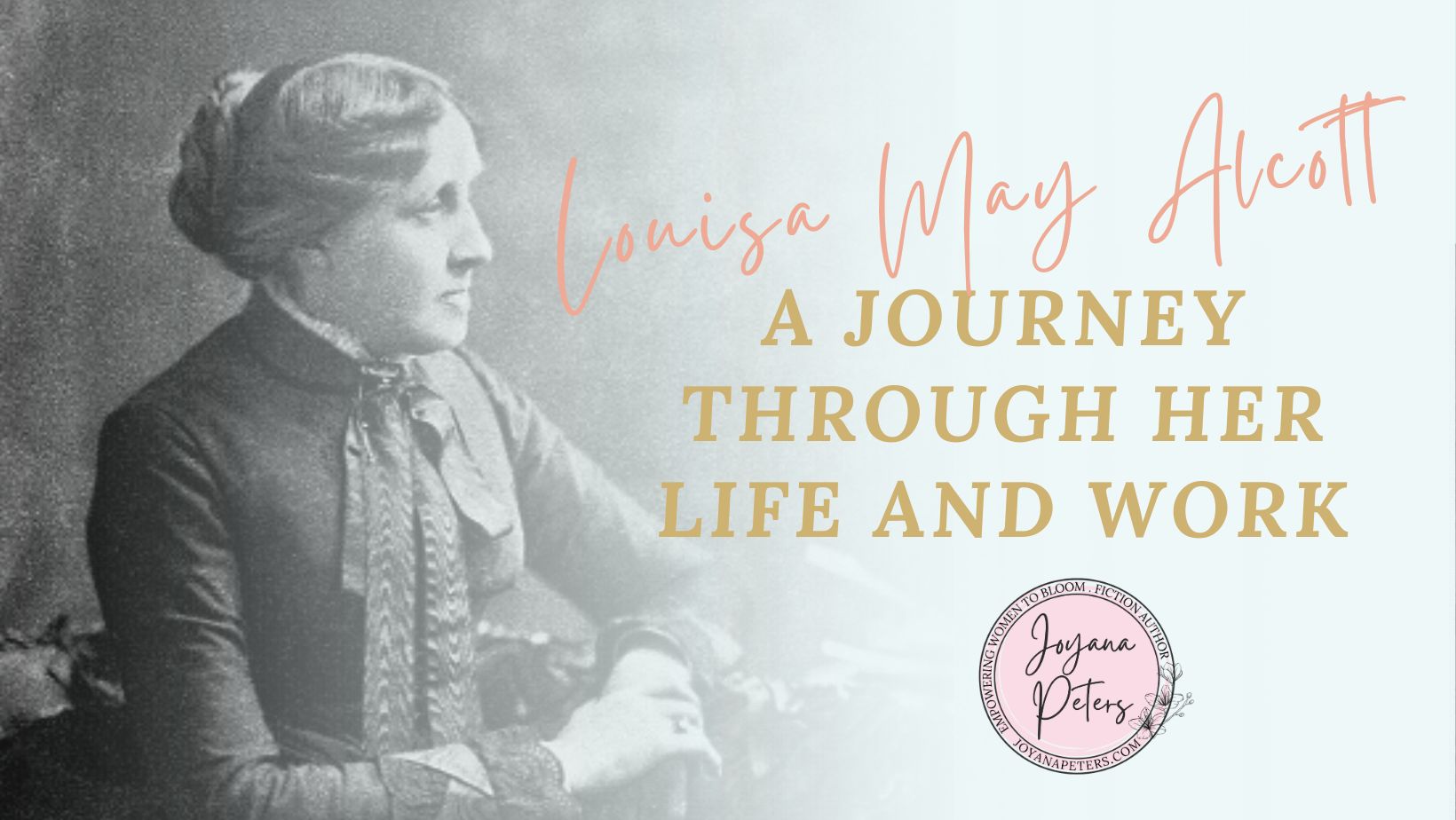
Pretty much everyone in society has heard of the classic novel, Little Women. To this day, the March girls are some of my favorite book characters. One of my childhood games was trying to classify which sister would fit someone’s personality. For instance, I’m a total Jo. Who would you be? Along with my love of all things Little Women, I have to love the woman behind the book. So, who was Louisa May Alcott?
Louisa May Alcott- The early years
Louisa May Alcott was an American novelist, short story writer and poet. She was born on November 29th, 1832 in Philadelphia. Alcott’s parents were passionate in both their religious and political beliefs. Alcott was mainly home schooled and was a voracious reader. She was especially moved by philosopher Henry David Thoreau, and authors Ralph Waldo Emerson and Nathanial Hawthorne. These inspirations are demonstrated in her writing.
Much like the March sisters, Alcott was one of four daughters and remained close with her sisters through adulthood. She was ahead of her time in writing educated, strong female characters in her 19th century novels. As a result, her writing greatly impacted American literature.
Alcott was first published in 1854 and gained a following of both adults and children even though she published many of her early works under the name A.M. Barnard. In 1868, her publisher asked Alcott to write a book for young women. To do so, she channeled her own experience growing up. Little Women was first published as a series of short stories, but was eventually compiled into one novel. The bookwas an instant success and immediately cemented Louisa May Alcott as one of the top novelists of the 19th and early 20th centuries.
Little Women, Big Impact
Alcott published a few sequels to Little Women in later years. She also became active in the women’s suffrage movement and wrote for a number of publications championing women’s rights.
Alcott never married or had children. She did adopt her niece after her sister died. She settled in Boston and continued to write stories about the characters from Little Women. Alcott unfortunately suffered from poor health which she attributed to mercury poisoning while she worked as a nurse during the Civil War. As a result, she died in 1888 at the age of 56.
To this day, Louisa May Alcott continues to be a household name and her novels remain on best seller lists throughout the world.
Find more ways to spoil your inner bookworm!
Check out the Amaryllis Co. Shop, fully stocked with custom designs perfect for every book loving Amaryllis Girl! From shirts, mugs, wine glasses, and more, I have curated a shop with all of my favorites! SHOP HERE!
As an Amazon Associate I earn from qualifying purchases.
Are you familiar with the name Nellie Bly? I’ve mentioned before that Nellie Bly is pretty important to Ruth in her third installment. Today I want to explain why. So, who was this famous woman?
Nellie Bly was born Elizabeth Jane Cochron on May 5th, 1864. Her father was quite wealthy and owned a mill in Pennsylvania. However, when Bly was six, her father died suddenly without a will. Unable to maintain their estate, they left the area and Bly’s mother remarried. She unfortunately divorced in 1878 due to abuse.
By the time Bly was 15, the family’s struggles had increased. Bly had been in and out of schools as the family moved around. They finally settled in Pittsburgh and Bly began to look for work to help support the family. Unfortunately due to her lack of regular education and her gender, work was hard to find.
Around that time, ThePittsburgh Dispatch published an article criticizing women in the workforce. Fed up, Bly penned a letter to the editor in response. She called for more opportunities for women, especially those responsible for the well-being of their families. The editor saw potential in her piece and invited her to work at the Dispatch as a reporter. She used the pen name Nellie Bly which she took from a well-known song at the time.
Bly quickly became a popular columnist, but was limited to only writing pieces that addressed women and soon quit in frustration. Wanting to write about more serious topics, Bly began searching for a newspaper that wouldn’t pigeon-hole her.
“While I live, I hope” – Nellie Bly
She moved to New York City in 1886 and soon famously stormed the office of the New York World demanding to speak to Joseph Pulitzer. She offered him a story about the immigrant experience. Pulitzer declined that story, but challenged her to investigate one of New York’s worst mental asylums, Blackwell’s Island. Bly not only accepted the assignment, she decided to pretend to have a mental illness to get herself admitted and experience firsthand how the patients were treated. With this assignment Bly became one of the most famous reporters in history.
Bly’s Ten Days in the Madhouse shocked the public and led to massive overhauls of the institution. In addition, her hands-on approach to reporting led to a new practice called investigative journalism. She continued to expose problems in New York society like mistreatment of domestic workers, a black market for buying infants, and corruption in state legislature. She captivated the public.
Her career hit a new high in 1889 when she decided to travel the world after reading Jules Verne’s popular novel, Around the World in 80 Days.The New York World published daily updates of her journey and she completed her travels in 72 days, a world record at the time.
Bly continued to publish influential pieces and interviewed some of the top labor rights activists, politicians and writers of her time. She then married at the age of thirty and retired from journalism.
A New Chapter in the Nellie Bly Story
Her husband died in 1903, leaving her in charge of his massive manufacturing companies. She became an inventor, patenting a number of products to enhance worker productivity in the oil industry, many of which are still used today. She also prioritized worker’s welfare, offering benefits and insurance. Unfortunately, Bly was not great with handling the financial side of the businesses and eventually had to declare bankruptcy.
She returned to journalism during WWI, again reporting on a number of impactful issues. Bly’s story ends soon after the war when she died from pneumonia in 1922. She was remembered in tributes by many as the “best reporter in America.”
Find more ways to spoil your inner bookworm!
Check out the Amaryllis Co. Shop, fully stocked with custom designs perfect for every book loving Amaryllis Girl! From shirts, mugs, wine glasses, and more, I have curated a shop with all of my favorites! SHOP HERE!