Indigenous Highlighting Yiddish

World Book Day Honors Indigenous Languages

As an Amazon Associate I earn from qualifying purchases.

April 23rd is UNESCO World Book Day and this year their focus is on Indigenous languages. If you’ve read my books, you know my main characters speak Yiddish, which is in fact an indigenous language. So, I wanted to take this opportunity to speak about the history of Yiddish.

Yiddish Linguistics

If you were to literally translate Yiddish, it means “Jewish”. Linguistically, it refers to the language spoken by the Ashkenazi Jews, or the Jews from Central and Eastern Europe. It comprises a variety of languages like medieval German, Hebrew, Aramaic, Slavic and Romance languages.

Yiddish Origins

It is very difficult to pinpoint the origins of the Yiddish language. The most widely accepted theory is during the 10th century there was a great migration of Jews from France and Italy to the German Rhine Valley. The belief is to find common ground to communicate amongst these different groups, the Yiddish language emerged.

Yiddish Uses

In most Ashkenazi communities they used Hebrew as their language of study for the Bible and prayer, and Yiddish was used for their everyday communication.

Twentieth Century Yiddish

The first international conference on Yiddish language met in 1908. It was there they declared Yiddish to be the “national language of the Jewish people.” This was the beginning of establishing cultural institutions and standardization within the Jewish community to preserve the integrity of the language. 

After that organizations around the world sprung up to offer schools, literature, theater and research to further Yiddish expression. Unfortunately, this screeched to a halt during the years leading up to WWII. Soon Yiddish writers were censored and arrested or even executed. Yiddish institutions were shut down. Eventually Yiddish was outlawed in many places completely.

Indigenous Languages: Yiddish

Post WWII

The Holocaust destroyed much of the Yiddish speaking population. Those remaining were often scared to speak the language. Many who immigrated to America were also facing intense pressure to acclimate. 

Hope for the Future

But Yiddish has experienced a resurgence in the last half century. It is again being studied as a serious academic discipline. Yiddish literature has been recognized and even awarded a Nobel Prize! 

Preservation efforts thrive and the importance of remembering and sharing the language are being brought to the forefront.

The importance of UNESCO and other indigenous language preservation efforts

However, there is more work to be done. At present, 96 percent of the world’s approximately 7,000 languages are spoken by only 3% of the population. Estimates suggest that more than half the world’s languages will become extinct by 2100. Other calculations suggest that 95% of the world’s languages will become extinct or seriously endangered by the end of this century. 

It’s important to remember that these indigenous languages are not only methods of communication. They’re also expressions of culture and knowledge accumulated over millennia. They are central to identity. When these languages are under threat, so too are the indigenous people themselves.

Check out literature by Indigenous Authors

The Yiddish Book Center Digital Library can be visited HERE.

Explore 25 books that highlight beauty of Indigenous literature HERE.

Celebrate and Share Indigenous Peoples’ Day on August 9th

Looking for information about my other books? Check out my Book Page here!

Want to make sure you’re the first to hear when I release a new book or novella? Subscribe to my blog below to never miss an update!

What's in a Name

What’s in a Name?

As an Amazon Associate I earn from qualifying purchases.

Just Like John Proctor questioned- How can I live without my name?

WOMENS HISTORY

What’s in a Name?

Happy March! It’s Women’s History Month and I can’t wait to share some of the fun content I’ve got prepared! We’ll start today with some info on female writers and the big question of the day- What’s in a name? Does our name actually define who we are?

Literature nerds like me might remember the anguished scene in The Crucible where John Proctor refuses to give up his name. “Because it is my name! How may I live without my name?” He views his name as his identity. His source of worth.

And yet, as we go into Women’s History Month– we have to examine the irony of this poignant scene, knowing women have been forced to give up their names in many capacities for centuries.

The theme of this year’s Women’s History Month is celebrating women in writing. This one obviously hits close to home for me. One thing it forces me to examine is the sacrifices women had to make to get their work out for public consumption. For years it was considered “unfeminine” or “unseemly” for women to be writers. Therefore, women were either turned away by editors or forced to publish under a man’s name instead of their own.

In a different capacity, the decision regarding my name came up in my own publishing journey. Any of you who know me personally know I publish under my maiden name instead of my married name. This was done for a few reasons- but honestly, the main reason was because as John Proctor said– It is my name! I began my writing journey in childhood. I practiced and got my degree in English, taught and began my MFA program all as Joyana Peters. So, yeah, I wanted to climb to the top of that mountain and fulfill that dream with the name I started with!

I leave you with this other little story to consider-

A girl was born on November 22nd, 1819. As was customary at the time, she was sent to boarding school at just five years old.

When the girl was sixteen, her mother died. Although she was thriving at school and showed great potential, she was forced to return home to work as her father’s housekeeper. The girl settled into a new monotonous existence where each day blended into the next.

At the age of twenty one, an opportunity arose. Her father decided it was time for her to marry. They moved to the city so he could search for a suitable match. But luckily, the girl developed a relationship with her liberal neighbors who hosted salons with great thinkers like Ralph Waldo Emerson. Over time they took her under their wing and the girl began to consider a different version of the life she was living.

What's in a Name?

Higher education for women was still not an option, but she was able to break into intellectual society by writing book reviews and translations. She eventually moved to London and found work with a publisher. There, she fell in love with a writer, but he was trapped in a horrible marriage and divorce was still not an option. Desperate to be together, they scandalized society by deciding to co-habitate together anyway.

She became an outcast, no longer welcome in society, although he suffered no consequences. But the girl decided to make the most of this time in isolation. If her name was already tarnished– why not assume the required male nom de plume and publish her writing?

The girl’s work took off like wildfire. Even Queen Victoria became a fan!

She continued to publish under the now famous nom de plume for the rest of her life. And her work has transcended time and still stands out as revelatory and brave as the woman who wrote it.

So, who was this amazing female writer? Mary Ann Evans otherwise known as George Eliot the famous writer of Middlemarch.

I’d love to hear your thoughts on this topic. What do you think our names say about us? Are they sources of our identity? Please comment on this post to share!


Did you enjoy this article? Check out these posts about some incredible Changemakers.

Find more ways to spoil your inner bookworm!

Check out the Amaryllis Co. Shop, fully stocked with custom designs perfect for every book loving Amaryllis Girl! From shirts, mugs, wine glasses, and more, I have curated a shop with all of my favorites! SHOP HERE!

Merchandise

Privacy Policy

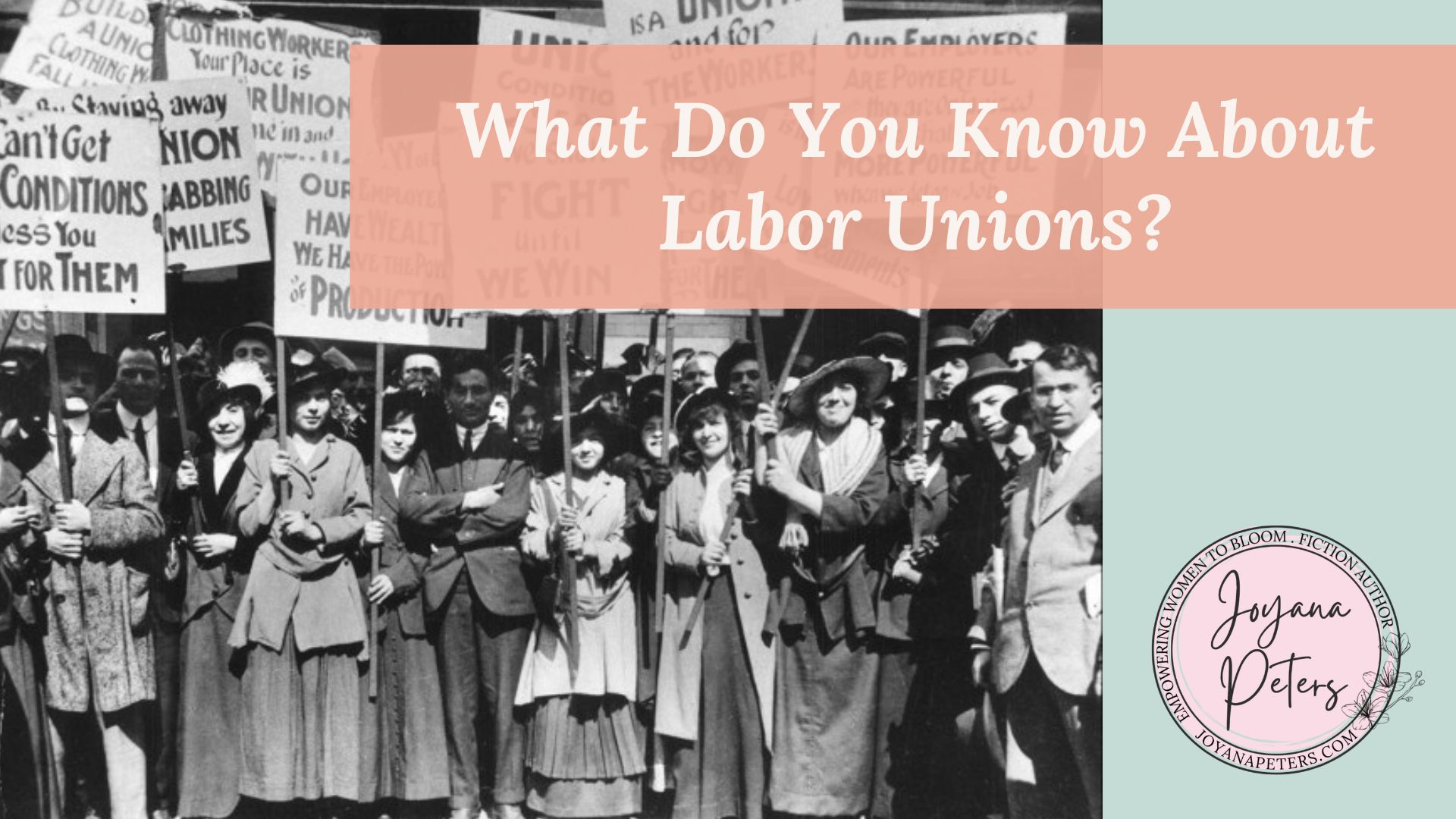
What Do You Know About Labor Unions?

What Do You Know About Labor Unions?

As an Amazon Associate I earn from qualifying purchases.

The ILGWU- it was so much more than labor protections…

Unions

Labor Unions in US History

I’m up in New York this week visiting family for two weeks. Yesterday, I got to enjoy a fantastic day in the city with my sister. We visited the Tenement Museum to start research for my next book and got to mozey around the Lower East Side. I even got to visit the Brown Building (aka the site of the Triangle Fire.) It was bittersweet to see it again after spending so much time writing about it these past few years.

One thing that really struck me as I went on this past tour and learned about the next phase of history for immigrants on the Lower East Side, was the rising role the International Ladies’ Garment Worker’s Union played for workers and their families.

When we think of labor unions. we think of the role they play in protecting workers’ rights. Negotiating fair pay and hours, protections etc. However, the ILGWU did FAR more than that.

One thing to remember was the Lower East Side of Manhattan was the Garment District. So, a large majority of residents had someone in their family working in a garment factory and therefore an affiliation with the union.

In the aftermath of the Garment Worker’s Strike and the Triangle fire in 1911 the union strengthened substantially. For one, it grew in its reach across other urban areas across the country. And as its reach and membership numbers grew, the union was able to focus on improving other quality of life issues for members and their families.

In 1913 they opened the first Union Health Center in NYC. They soon opened additional centers in other cities across the county and eventually offered mobile health centers to workers in smaller towns and rural areas. At the centers they offered dental care, check ups, and prescriptions to workers and their families.

By 1915 the union began to offer educational opportunities to its members. They offered coursework ranging from English classes to labor history classes. They partnered with high schools and colleges to offer incentives for members to earn credits and diplomas and eventually even offered scholarships for college education.

By 1919, there were even vacation getaways available in the Poconos and Catskills for families to escape busy city life.

These safety net offerings were integral to survival for many of these families. This was especially evident during the Depression era where many men were unable to find jobs and women stepped up to provide the bread-winning role and support for the family. 

It’s always interesting to me to look back in history and see how a story changed. Seeing what labor unions offered and how accepting people were of these offerings, it is difficult to imagine how far in opinion and reputation the pendulum could swing in its depiction of labor unions. How and when did that occur? And why? Fear? Slander?

It makes you wonder how fifty years from now our current times will be depicted. ..

Did you enjoy this article? Here are a few more reads that you may be interested in!

US IMMIGRATION HISTORY FI

U.S. Immigration History- How Much Do You Know About It?

As an Amazon Associate I earn from qualifying purchases.

I updated this post in 2024 as I was writing The Woman in the Newsroom. It now explains why Ruth needed to involve herself in the fight for an open U.S. Immigration policy.

U.S. Immigration History Statue of Liberty

U.S. Immigration History’s Dual Nature

If you read The Girl From Saint Petersburg, you’ve seen I included Emma Lazarus’s famous poem, The New Colossus, in the beginning. I love this poem and have always found it intriguing. It’s welcoming, yet imposing nature. Just like the Statue itself. I went to the Statue of Liberty on a class field trip in the fourth grade. The Statue’s face freaked me out. How could this welcoming “symbol” have such an unfriendly looking face? As an adult, I now find the statue’s “split personality” to be that much more intriguing and symbolic of U.S. Immigration History itself.

Yes, the Statue carries Lazurus’s famous lines. They’re synonymous with U.S. immigration history. We’re the Melting Pot Nation, right? “Give me your tired, your poor, your huddled masses yearning to breathe free.” But how much of that is true? Did we really welcome ALL immigrants with open arms?

Our TRUE U.S. Immigration History

In reality, many would view U.S. immigration history as biased. Our nation’s complicated welcoming/exclusionary stances go far further back than many of us realize. Immigration limits began as far back as 1790. That is when Congress passed the first law dictating that only free white people of “good character” living in the U.S. for two years or longer could apply for citizenship.

The years following stirred up more distrust as immigrants from different parts of Europe continued to arrive. Divisions began and America’s first anti-immigrant political party formed by 1849. They drummed up support for the states to pass their own anti-immigration laws. But the Supreme Court overturned them in 1875, declaring only the federal government could make and enforce immigration laws.

Then the REAL Exclusions began…

The Chinese Exclusion Act passed in 1882. This was the first act in U.S. immigration history to place broad restrictions on a certain group. However, it was far from the last. By 1891, immigration policies expanded to exclude polygamists, people convicted of certain crimes, and the sick and diseased. The Federal Office of Immigration also began along with stationing immigration inspectors at all ports of entry.

Xenophobia reached new heights at the start of the World Wars. The U.S. wanted no trouble and turned insular. The Immigration Act of 1917 established a literacy requirement for all immigrants and halted almost all immigration from Asian countries completely.

Where The Girl in the Newsroom Begins

Harding became president in January of 1921. Soon after he proposed a national quota system. The Immigration Restriction Act (also called the Emergency Quota Act) passed as a temporary measure in 1921. However, it proved to be the “turning point” in U.S. immigration history.

U.S. Immigration Quote

For the first time it added numerical limits on immigration and created the use of a calculating quota system called the National Origins Formula. Harding became president in January of 1921. Soon after he proposed a national quota system. The Immigration Restriction Act (also called the Emergency Quota Act) passed as a temporary measure in 1921. However, it proved to be the “turning point” in U.S. immigration history. For the first time it added numerical limits on immigration and created the use of a calculating quota system called the National Origins Formula.The system calculated and allowed new immigrants into the country based on the number of current immigrants with those origins currently in the United States. Therefore, the formula favored Northern and Western European countries allowing immigrants from these areas to account for 70% of the issued visas.

Politicians, journalists (like Ruth), religious leaders, you name it, all fought against the Immigration Restriction Act. However, they renewed the Act each year. In 1924, the Immigration Act became a permanent law with additional restrictions.

The 1924 Immigration Restriction Act

The finalized law not only continued to heavily favor Northern and Western European countries, it also lowered the existing calculating quotas! They pushed back the origin year the calculations used. Instead of calculating from current numbers of immigrants in the country, the quota was calculated based off the number in the country in 1890. This further biased against immigrants from other parts of the world. The Act also established a new U.S. Border Patrol to crack down on illegal immigrants crossing the borders from Mexico and Canada.

The quota system remained in place until 1965 when Lyndon Johnson overturned it with a new seven-category preference system. He called the old quota system “unAmerican,” and said the new bill would correct a “cruel and enduring wrong in the conduct of the American nation.”

U.S. Immigration Today

My last installment of Ruth’s story will take place during the time of this quota system and initial resistance. As I’ve begun research for it, my stomach has turned at the horrors we allowed in refusing refugees from Holocaust concentration camps etc.

I’m appreciative of Johnson’s apology, but I find myself still wondering at the complexities of our system. How much better are we doing? Will we ever have an immigration system that is truly equitable and fair? And most importantly, will we ever have an agreed upon definition of what it means to be an American?

Enjoy this post? Here are a few more than may interest you!

Find more ways to spoil your inner bookworm!

Check out the Amaryllis Co. Shop, fully stocked with custom designs perfect for every book loving Amaryllis Girl! From shirts, mugs, wine glasses, and more, I have curated a shop with all of my favorites! SHOP HERE!

Merchandise

Privacy Policy

Shakespeare

The Shakespeare Mystery- Was Shakespeare Really the True Author of His Plays?

As an Amazon Associate I earn from qualifying purchases.

Some believe it is the greatest literary mystery of all time. Was Shakespeare REALLY the true author of his plays and sonnets?

Shakespeare Mystery

The Shakespeare Mystery

There are so many questions asked when analyzing the Shakespeare Mystery. Did he really exist or was he a pen name? Was he really a Catholic hiding in Protestant England? And one of the most elusive of all- were his first sonnets published with his permission?

Alive or Dead? Permission or Not– That is the Question.

On May 20th 1609, the first folio of Shakespeare’s sonnets was published. A man named Thomas Thorpe was listed as the publisher. However, there was no dedication written by Shakespeare and no mention of him involved in the editing or acknowledgements. How could that be?

Critics and historians have analyzed and debated this for hundreds of years, if Shakespeare was still supposedly alive for this publication, why was he not involved in it? And an even bigger question- why were the publication and proceeds not listed in his estate or will?

Some use this as evidence to prove that William Shakespeare really wasn’t the author of the famous plays and sonnets. Others argue that it proves Thorpe published without Shakespeare’s permission. But if that was the case, why didn’t Shakespeare contest it after the fact?

I’ve always found the Shakespeare Mystery intriguing. Personally, I hope we never find real answers to these questions. I hope this for a few reasons.

One- I think I’d be heartbroken if he was ever truly discredited. I’ve been to Stratford Upon Avon, I’ve walked where he walked, seen his grave etc. And I love the idea of a self-taught author who was able to express his genius without any formal training.

And Two- I think the not knowing honestly adds to the romance and mystery of his works. I mean, combined with the magic of Macbeth or Midsummer Night’s Dream– how could you not appreciate the added mystery surrounding the author? The potential suspension of disbelief or acceptance of the unknown?

To me, these swirling mysteries regarding Shakespeare allow him to be held as this almost mythical figure apart from us mere mortals. I applaud the critics and historians who want to crack the case. But for me, I’m content with leaving this as one of life’s great mysteries and perhaps even chalking it up to– magic.

Enjoy this post? Here are a few more you may be interested in…

Find more ways to spoil your inner bookworm!

Check out the Amaryllis Co. Shop, fully stocked with custom designs perfect for every book loving Amaryllis Girl! From shirts, mugs, wine glasses, and more, I have curated a shop with all of my favorites! SHOP HERE!

Merchandise

Privacy Policy

Mother's Day

Do You Know The History of Mother’s Day?

As an Amazon Associate I earn from qualifying purchases.

Believe it or not, Mother’s Day was not always about cards or brunch celebrations.

Mothers

The History of Mother’s Day

Do you know the real history of Mother’s Day? It might surprise you!

We assume Mother’s Day was created as a legal holiday to honor mothers signed into effect by a President. Well, that did happen. (Thanks President Wilson!) But that was not the true origin of the holiday. The first Mother’s Day origins came much earlier and for very different reasons. Read on to learn about the true history of Mother’s Day.

Mother’s Day began as a women’s movement to repair the nation after the Civil War. Two incredible women led the way: Ann Reeves Jarvis and Julia Ward Howe.

The History of Ann Reeves Jarvis

Known as “Mother Jarvis”, – Ann Reeves Jarvis was an Appalachian activist, who wanted to find ways to bridge the gaps between the two sides during the war. She created women’s brigades to help any women and children in need regardless of which side they supported. After the war, she continued bringing people together by organizing Mother’s Clubs dedicated to helping newly widowed mothers (again from both sides) better their living conditions.

The History of Julia Ward Howe

Julia Ward Howe was another formidable force during the Civil War. She was a famous poet. In addition, to penning the Battle Hymn of the Republic, she also used her writing gifts to encourage thought and pacifism. She penned a proclamation, dedicated to celebrating peace and ending the war. She believed mothers, in particular, were key to preventing future cruelties and lives lost in war. She called for an annual Mother’s Day for Peace where women could gather and further their cause. After all, every soldier has a mother.

Howe’s version of Mother’s Day was held in Boston and other locations for over 30 years. However, it fell apart during World War I.

Mother’s Day and any forms of its celebration was forgotten until Jarvis’s daughter brought it back to life. After her mother’s death in 1905, Anna Jarvis wanted to memorialize her mother and honor her legacy. She believed establishing a national day to commemorate mothers would be the perfect way to do that.

She began campaigning and lobbying national groups for support. And on May 10, 1907 she held the first Mother’s Day ceremony. The city of Philadelphia repeated the ceremony the following year and the mayor soon declared it a public holiday.

From there, appeals continued for national support and in 1914, Mother’s Day was declared a federal holiday.

Some would say we’ve lost sight of the original sentiment behind the day over the years. We’ve allowed it to get commercial and be another excuse for cards, gifts and obligation. Yes, we should most definitely pamper our mothers on this day. (Seriously guys, get that massage gift card to honor their hard work, please!)

But let’s take a moment to remember the original intent behind the day as well. The original founders recognized something sacred about the bonds of motherhood. Let’s face it, there is a lot of ugliness in the world. And it often feels we have more differences than things in common. But there is one bond that transcends all the differences in the world. Across cultures, socioeconomic status etc.,. – there is no more common bond than the bond of motherhood.

So, on this upcoming Sunday- while you toast at brunch or whatever you’re doing to celebrate, perhaps take a moment to remember that original intent to repair and further the efforts for peace. Mothers, we all want what’s best for our children. So, let’s work together and do what we can to make this world a better place for them.

Happy Mother’s Day!

Enjoy this post? Here are a few more that may interest you!

Find more ways to spoil your inner bookworm!

Check out the Amaryllis Co. Shop, fully stocked with custom designs perfect for every book loving Amaryllis Girl! From shirts, mugs, wine glasses, and more, I have curated a shop with all of my favorites! SHOP HERE!

Merchandise

Privacy Policy