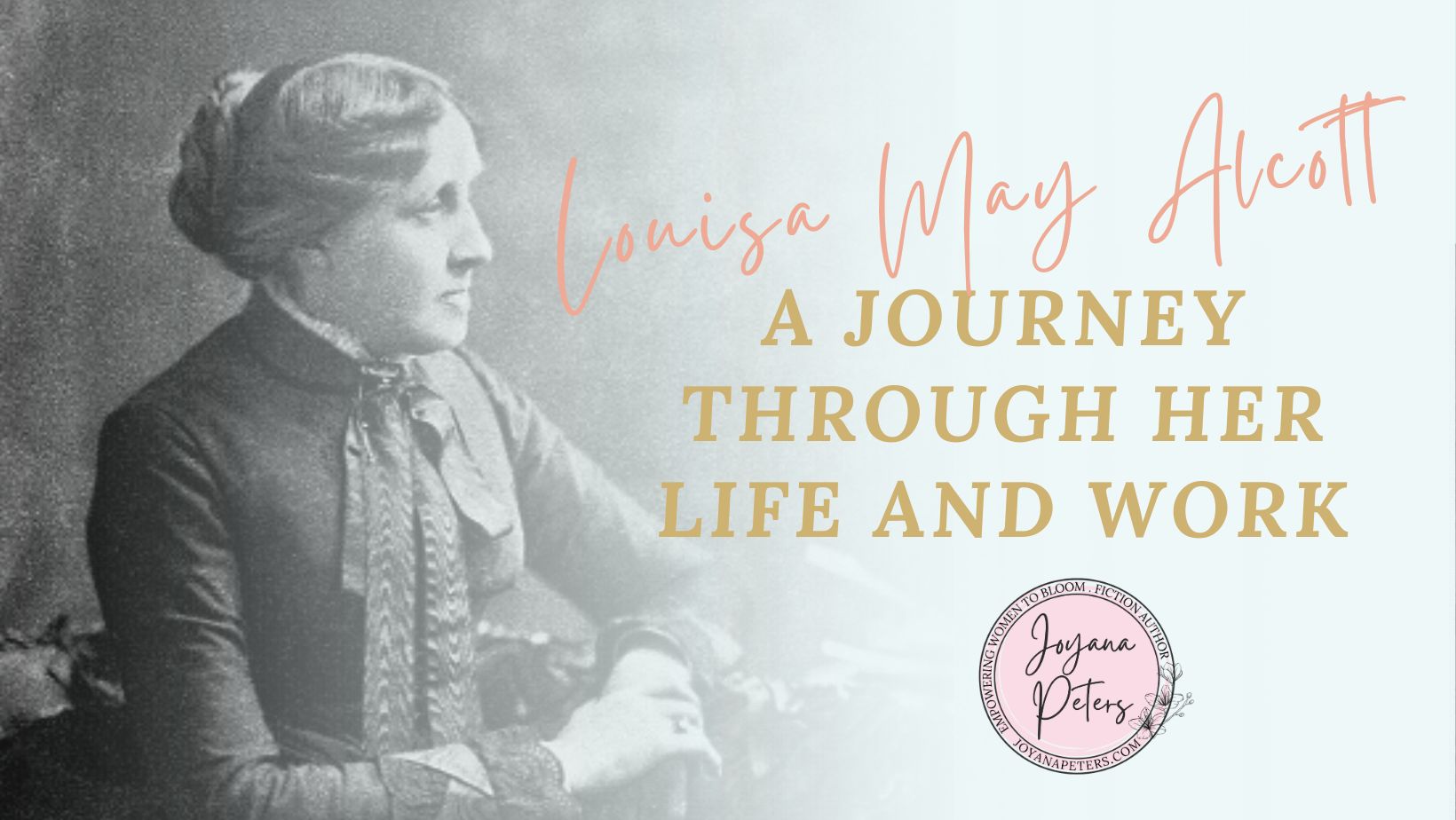
Louisa May Alcott

Changemaker Spotlight: Get to Know Louisa May Alcott

As an Amazon Associate I earn from qualifying purchases.

Meet the Woman behind the Women

Pretty much everyone in society has heard of the classic novel, Little Women. To this day, the March girls are some of my favorite book characters. One of my childhood games was trying to classify which sister would fit someone’s personality. For instance, I’m a total Jo. Who would you be? Along with my love of all things Little Women, I have to love the woman behind the book. So, who was Louisa May Alcott?

Louisa May Alcott- The early years

Louisa May Alcott was an American novelist, short story writer and poet. She was born on November 29th, 1832 in Philadelphia. Alcott’s parents were passionate in both their religious and political beliefs. Alcott was mainly home schooled and was a voracious reader. She was especially moved by philosopher Henry David Thoreau, and authors Ralph Waldo Emerson and Nathanial Hawthorne. These inspirations are demonstrated in her writing. 

Louisa May Alcott

Much like the March sisters, Alcott was one of four daughters and remained close with her sisters through adulthood. She was ahead of her time in writing educated, strong female characters in her 19th century novels. As a result, her writing greatly impacted American literature.

Alcott was first published in 1854 and gained a following of both adults and children even though she published many of her early works under the name A.M. Barnard. In 1868, her publisher asked Alcott to write a book for young women. To do so, she channeled her own experience growing up. Little Women was first published as a series of short stories, but was eventually compiled into one novel. The book was an instant success and immediately cemented Louisa May Alcott as one of the top novelists of the 19th and early 20th centuries.

Little Women, Big Impact

Alcott published a few sequels to Little Women in later years. She also became active in the women’s suffrage movement and wrote for a number of publications championing women’s rights. 

Alcott never married or had children. She did adopt her niece after her sister died. She settled in Boston and continued to write stories about the characters from Little Women. Alcott unfortunately suffered from poor health which she attributed to mercury poisoning while she worked as a nurse during the Civil War. As a result, she died in 1888 at the age of 56. 

To this day, Louisa May Alcott continues to be a household name and her novels remain on best seller lists throughout the world.

Find more ways to spoil your inner bookworm!

Check out the Amaryllis Co. Shop, fully stocked with custom designs perfect for every book loving Amaryllis Girl! From shirts, mugs, wine glasses, and more, I have curated a shop with all of my favorites! SHOP HERE! You can also find my collection of bookish merchandise on Etsy.

Merchandise

Privacy Policy

Nellie Bly, Ten Days in a Mad-House

Changemaker Spotlight: Meet Nellie Bly, The Best Reporter in America

As an Amazon Associate I earn from qualifying purchases.

Are you familiar with the name Nellie Bly? I’ve mentioned before that Nellie Bly is pretty important to Ruth in her third installment. Today I want to explain why. So, who was this famous woman?

Nellie Bly was born Elizabeth Jane Cochron on May 5th, 1864. Her father was quite wealthy and owned a mill in Pennsylvania. However, when Bly was six, her father died suddenly without a will. Unable to maintain their estate, they left the area and Bly’s mother remarried. She unfortunately divorced in 1878 due to abuse.

By the time Bly was 15, the family’s struggles had increased. Bly had been in and out of schools as the family moved around. They finally settled in Pittsburgh and Bly began to look for work to help support the family. Unfortunately due to her lack of regular education and her gender, work was hard to find. 

Around that time, The Pittsburgh Dispatch published an article criticizing women in the workforce. Fed up, Bly penned a letter to the editor in response. She called for more opportunities for women, especially those responsible for the well-being of their families. The editor saw potential in her piece and invited her to work at the Dispatch as a reporter. She used the pen name Nellie Bly which she took from a well-known song at the time. 

Bly quickly became a popular columnist, but was limited to only writing pieces that addressed women and soon quit in frustration. Wanting to write about more serious topics, Bly began searching for a newspaper that wouldn’t pigeon-hole her. 

Nellie Bly

“While I live, I hope” – Nellie Bly

She moved to New York City in 1886 and soon famously stormed the office of the New York World demanding to speak to Joseph Pulitzer. She offered him a story about the immigrant experience. Pulitzer declined that story, but challenged her to investigate one of New York’s worst mental asylums, Blackwell’s Island. Bly not only accepted the assignment, she decided to pretend to have a mental illness to get herself admitted and experience firsthand how the patients were treated. With this assignment Bly became one of the most famous reporters in history.

Bly’s Ten Days in the Madhouse shocked the public and led to massive overhauls of the institution. In addition, her hands-on approach to reporting led to a new practice called investigative journalism. She continued to expose problems in New York society like mistreatment of domestic workers, a black market for buying infants, and corruption in state legislature. She captivated the public.

Her career hit a new high in 1889 when she decided to travel the world after reading Jules Verne’s popular novel, Around the World in 80 Days. The New York World published daily updates of her journey and she completed her travels in 72 days, a world record at the time.

Bly continued to publish influential pieces and interviewed some of the top labor rights activists, politicians and writers of her time. She then married at the age of thirty and retired from journalism. 

A New Chapter in the Nellie Bly Story

Her husband died in 1903, leaving her in charge of his massive manufacturing companies. She became an inventor, patenting a number of products to enhance worker productivity in the oil industry, many of which are still used today. She also prioritized worker’s welfare, offering benefits and insurance. Unfortunately, Bly was not great with handling the financial side of the businesses and eventually had to declare bankruptcy.

She returned to journalism during WWI, again reporting on a number of impactful issues. Bly’s story ends soon after the war when she died from pneumonia in 1922. She was remembered in tributes by many as the “best reporter in America.”

Find more ways to spoil your inner bookworm!

Check out the Amaryllis Co. Shop, fully stocked with custom designs perfect for every book loving Amaryllis Girl! From shirts, mugs, wine glasses, and more, I have curated a shop with all of my favorites! SHOP HERE! You can also find my collection of bookish merchandise on Etsy.

Merchandise

Privacy Policy

Margaret Sanger

Margaret Sanger and her Birth Control Crusade: A Changemaker Spotlight

As an Amazon Associate I earn from qualifying purchases.

No woman can call herself free who does not own and control her body. -Margaret Sanger

Margaret Sanger was a famous American activist who devoted her life to legalizing birth control and making it universally available for women. She was raised during the Comstock laws. The laws federally prohibited women from having access to contraceptives. Sanger believed the only way to overturn these laws was to break them.

Starting in 1910, Sanger relentlessly worked to bring birth control information and contraceptives to women to relieve them from the dangers of repeated pregnancies.

Margaret Sanger

Margaret Sanger’s Personal Experience

Sanger’s passion came from personal experience and tragedy. One of eleven kids, Sanger watched her mother’s health decline further and further after each pregnancy. Eventually at age nineteen, Sanger watched her mother succumb to tuberculosis. She’d only been fifty, but she’d never recovered from seven miscarriages and carrying eleven children. Sanger blamed her father and argued with him over her mother’s coffin, “You caused this. Mother is dead from having too many children.”

Margaret Sanger and a Shift in Purpose

Sanger became a nurse and found work as a visiting nurse on the Lower East Side of Manhattan. In this working class neighborhood, she saw her mother’s fate tenfold. Lacking contraceptives, many of these women turned to cheap unsafe abortions when faced with another unwanted pregnancy. Sanger was then called in to care for these women after these botched procedures. After experiencing enough of the traumatic effects of these abortions, Sanger decided to shift her efforts from nursing to preventative measures.

Birth Control and Information

In 1914, Sanger coined the term “birth control.” She then began her crusade to arm women with information and access to contraceptives. Sanger was arrested multiple times for sending diaphragms through the mail and for even opening the first birth control clinic in the country. But, she would not give up. 

In 1921, Sanger founded the American Birth Control League, the precursor to the Planned Parenthood Federation. She spent the next three decades fighting to provide mainstream access to the American public and was eventually successful. Her efforts contributed to several court decisions that eventually legalized access to birth control in America. 

Although her memory is controversial, no one can argue that Sanger’s efforts did not improve the lives of women. She will forever be remembered as the founder of the birth control movement.

If you liked this post, please leave a comment below. To read more of Joyana’s blog posts click here!

Find more ways to spoil your inner bookworm!

Check out the Amaryllis Co. Shop, fully stocked with custom designs perfect for every book loving Amaryllis Girl! From shirts, mugs, wine glasses, and more, I have curated a shop with all of my favorites! SHOP HERE! You can also find my collection of bookish merchandise on Etsy.

Merchandise

Are you a VIP Member yet? If you’re interested in seeing Joyana’s Bonus content and ALL of her past newsletters make sure you sign up today! JOIN HERE.

Make sure you are the first to hear when I release a new book or novella! Subscribe to my blog below to never miss an update!

Jane Addams

Who was Jane Addams? Changemaker Spotlight

As an Amazon Associate I earn from qualifying purchases.

It’s an important birthday this week. On September 6th 1860- one of the most important American social welfare activists was born. You might not be familiar with her by name, but I bet you’ve heard of some of her accomplishments as they helped shape the settlement house movement across the country. So, who was Jane Addams?

Jane Addams won worldwide recognition in the early twentieth century for her contributions as a pioneer social worker, feminist and activist in America. It all started with her founding of a famous place called Hull House in 1889. 

Addams began her mission with her friend, Ellen Starr, and expressed her mission statement to be- “providing a center for a higher civic and social life, to institute and maintain educational and philanthropic enterprises, and to investigate and improve the conditions in the industrial districts of Chicago.” With the founding of Hull House and this mission statement, the settlement house movement began.

Addams and Starr hit the ground running. They made speeches about the needs of the lower class, raised money, recruited young female well-to-do volunteers, and provided childcare and nursing services. 

Jane Addams’ Hull House Legacy

Hull House

By the second year of Hull House’s existence, it was providing services to two thousand people a week. They had morning kindergarten classes, afternoon classes for older children and night school for adults. They also eventually offered an art gallery and studio, a public kitchen and cooking and sewing classes, a gymnasium and swimming pool, a boarding house for girls, a music school, a library, and an employment bureau. 

In 1892, Addams published her findings, entitled the “three Rs”, on what made the settlement house a success. Residence, Research and Reform became the pillars for the settlement house movement. These were described as “close cooperation with the neighborhood people, scientific study of the causes of poverty and dependence, communication of these facts to the public, and persistent pressure for [legislative and social] reform…”

These published findings traveled the nation and soon settlement houses sprang up in other working class areas of cities nationwide.

As Addams became more famous for her successful efforts, she was drawn into more areas of civic needs. In 1905, she was elected to the Chicago Board of Education. She was later made chairman of the School Management Committee. She worked to create the Chicago School of Civics and Philanthropy and also became the first female president of the National Conference of Charities and Corrections. To continue her research on causes of poverty and needs for reform, she led investigations of midwifery and childbirth conditions, narcotics consumption, milk supplies, and sanitary conditions in lower class areas. 

I am not one of those who believe – broadly speaking – that women are better than men. We have not wrecked railroads, nor corrupted legislatures, nor done many unholy things that men have done; but then we must remember that we have not had the chance. – Jane Addams

Addams was an ardent feminist and an involved suffragette. But she went even further than supporting women’s voting rights. She believed that not only should women vote, but they should push to participate in legislation and politics. 

Addams was also a pacifist and had a lifelong objective to rid the world of war. She gave lectures at universities across the country and wrote a book entitled the Newer Ideals of Peace. Addams spoke out against America’s entry in the First World War and served on many boards of women pacifist organizations. She eventually became the president of the Women’s International League for Peace and Freedom.

In 1931, Jane Addams was awarded the Nobel Peace Prize. She was the second woman to ever receive this honor. 

If you liked this post, please leave a comment below. To read more of Joyana’s blog posts click here!

Connect with Joyana!

Get reminders of upcoming events, book promos and new releases, delivered straight to you!

Please wait...

I am excited to share my favorite bookish news with you soon!

Find more ways to spoil your inner bookworm!

Check out the Amaryllis Co. Shop, fully stocked with custom designs perfect for every book loving Amaryllis Girl! From shirts, mugs, wine glasses, and more, I have curated a shop with all of my favorites! SHOP HERE! You can also find my collection of bookish merchandise on Etsy.

Merchandise

Are you a VIP Member yet? If you’re interested in seeing Joyana’s Bonus content and ALL of her past newsletters make sure you sign up today! JOIN HERE.

Make sure you are the first to hear when I release a new book or novella! Subscribe to my blog below to never miss an update!